



Yes, you can put peel and stick wallpaper over existing wallpaper — but only under specific conditions. The old wallpaper has to be smooth, flat, and well-adhered. If your current paper is bubbling, peeling at the seams, or textured, you'll get better results stripping it first.
Here's the honest read: covering wallpaper with peel and stick is a shortcut, not a guarantee. It works beautifully when the prep is right, and it fails fast when it isn't. We've spent 20+ years watching DIYers try every variation, so here's what actually works — and when to skip the shortcut and start fresh.
The short answer
If you're scanning for the verdict, here it is:
- Yes — if the old wallpaper is smooth, flat, tightly adhered, and not vinyl-coated.
- No — if it's textured, embossed, bubbling, peeling, or has multiple layers.
- Maybe — if you're willing to flatten loose spots, sand high points, and prime first. But it's a project, not a quick fix.
The rest of this article is for everyone who lands in "maybe" or wants to be sure they're really in the "yes" category.
When you can apply peel and stick wallpaper over existing wallpaper
Four conditions need to be true at the same time:
- Smooth surface. Run your hand across the wall. If you feel raised patterns, embossing, or pebbled texture, the new paper will mirror that texture and any seams will be obvious.
- Tightly adhered. Push gently along the existing seams. If anything lifts, the new layer will lift with it.
- Non-vinyl finish. Vinyl-coated wallpaper has a slick surface that peel-and-stick adhesive struggles to bond to long-term. If you can scratch the surface and see paper fibers, you're good. If it feels plasticky, plan to prime.
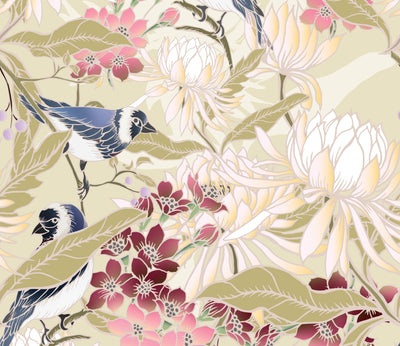
- Light or neutral base color. Dark or heavily patterned old wallpaper can ghost through thinner peel-and-stick designs. Bold patterns like our Peony Party or Red Bricks sheets are dense enough to hide most underlying patterns; lighter, airier designs may not be.
When you should remove the old wallpaper first
Don't fight a losing battle. Strip the existing layer if any of these apply:
- Embossed or textured wallpaper (anaglypta, faux grasscloth, raised flock patterns)
- Vinyl wallpaper that won't take a primer well
- Multiple existing layers stacked over the years
- Visible bubbles, lifting seams, or moisture damage
- Glossy finish that beads water when you mist it
Stripping takes a weekend. A failed peel-and-stick install over the wrong base takes a weekend to apply and another weekend to fix. Math wins here.
How to test compatibility before you commit
Before you order enough sheets for the whole wall, run a one-foot test patch. Here's the protocol:
- Pick the most visible part of the wall (this is where it'll look its worst — better to fail there than learn the lesson at eye level).
- Apply a single sheet, smoothing carefully from center outward.
- Wait 48 hours.
- Check the edges with your fingernail. If anything is lifting, peeling, or bubbling, the wall isn't ready.
- Stand back six feet. Can you see the old pattern through? Can you see seam lines from the original paper? If yes, the new design isn't opaque enough OR the old surface needs more prep.
This single sheet costs you a fraction of a full project. Always run it.
Step-by-step: applying peel and stick wallpaper over existing wallpaper
If your test patch passed, here's the install:
- Inspect and repair. Walk the wall. Re-glue any loose seams in the existing wallpaper using a vinyl-over-vinyl adhesive. Sand down high spots with 220-grit. Trim any peeling edges flush.
- Clean and dry. Wipe with a damp microfiber cloth (no soap residue). Let it fully dry — at least 4 hours.
- Prime. Apply a wallpaper primer in a semi-gloss or eggshell finish. This is the step most people skip and most regret. Primer creates a barrier between the old adhesive and the new, and gives a consistent surface for the peel-and-stick to grab.
- Mark a plumb line. Use a level to draw a vertical line where your first sheet will land. This is your reference for the entire wall.
- Peel and apply. Peel the backing 12-18 inches at a time. Align the top edge with the ceiling, smooth from center outward with a felt squeegee or your hand wrapped in a soft cloth. Work down the wall.
- Match seams. Each sheet butts up against the next — don't overlap. Match the pattern at the seam before you smooth.
- Trim excess. Use a sharp blade and a metal ruler at ceiling, baseboard, and outlet edges. Change blades often — dull blades tear instead of cut.
For first-time installs over existing wallpaper, denser patterns are forgiving. Red Bricks hides minor seam offsets; Indigo Diamonds distracts the eye from any small ghost-through. Lean into bold for your first try.
Frequently asked questions
Will old wallpaper show through peel and stick? Most modern peel and stick wallpapers are opaque enough to hide light patterns and color. Heavily textured or dark wallpapers may ghost through, especially with thin, light-colored designs. Run a test patch first.
Can I remove the new peel and stick wallpaper later without damaging the old one? Yes — when you peel off the new layer, the original wallpaper underneath usually stays intact. You may see minor adhesive residue, which cleans with mild soap and water.
Does the old wallpaper need to be primed first? Strongly recommended. Wallpaper primer (semi-gloss or eggshell) creates a stable, consistent surface for the new adhesive to grab. Skipping primer is the most common reason peel-and-stick over wallpaper fails after a few weeks.
Is it cheaper to remove the old wallpaper or to cover it? Covering is faster, but only when the old paper is in good shape. If you'd need to do significant prep (sanding, multiple primer coats, fixing seams), stripping ends up easier — and the new install will last longer.
How long will peel and stick wallpaper last when applied over existing wallpaper? When the prep is right (smooth, flat, primed), you can generally expect a lifespan similar to a direct-to-drywall install, and it stays fully removable when you're done. Actual longevity varies with wall conditions and environment, so check the product details for specifics.
Walls are design opportunities — but only when the foundation is right. If your existing wallpaper is sound, smooth, and flat, our peel and stick sheets give you a fast refresh without the demolition. If the existing layer is fighting you, take the time to strip first. Either way, you'll end up with a wall you actually want to look at. Browse our full peel and stick wallpaper collection to find your next pattern.
Featured in this article
Shop the wallpapers mentioned above.


Lining Kitchen Shelves: The Order of Operations

How to Choose Shelf Liner: Five Questions That Decide It

Cabinet Liner: How to Line the Inside of Kitchen Cabinets

Non-Toxic Shelf Liner: What the Label Actually Tells You

Decorative Drawer Liners: Pattern Scale in a Small Box


