






Everything that makes shelf liner hard in a kitchen is missing from a closet. No steam off a kettle, no oil drifting up from a pan, no door swinging open forty times a day. A closet shelf mostly just sits there being dry, and for a sheet of self-adhesive paper that is close to ideal conditions.
Why a closet liner has the easiest job in the house
A closet liner is a finished surface laid over an unfinished one. The shelf underneath is usually raw or industrial looking, the liner covers it, and everything you set down after that lands on something smooth and printed instead of on grey board.
What makes closets and dressers the friendliest place to do this is the air. Main Street's published application guidance lists areas exposed to moisture, meaning bathrooms, showers and wet zones, among the surfaces to avoid. A bedroom closet is the opposite of that: enclosed, room temperature, and generating no humidity except from clothes you hang up damp, which you should not be doing anyway.
Two honest caveats. Not every closet is dry: one that shares a wall with a bathroom, sits in a basement, or backs onto a poorly insulated exterior wall can hold real damp, and you will smell it when you open the door. And the 11 x 16 in Classic Sheets and the Craft Paper line are paper, not sold as waterproof or water resistant, so fix a moisture problem before you line anything.
Check what the shelf is made of before you cut a single sheet
Main Street publishes a short list of best surfaces: smooth tile, sealed wood, and clean painted drywall. Closet shelving rarely announces which of those it is, so give it two minutes first.
- White melamine or laminate shelving. The most common closet shelf there is, and not on the published best surfaces list. It is smooth and sealed, which is promising, but coatings vary by manufacturer. Stick one sheet in the back corner of the top shelf, leave it a week, then pull it and see what happens.
- Sealed or painted wood. On the list. This is the straightforward case.
- Raw particleboard, MDF or hardboard. Extremely common as a dresser drawer bottom, and porous. Porous surfaces drink adhesive: weaker grip going on, more fight coming off. Test before committing a whole pack.
- Coated wire shelving. There is no continuous flat face here for a sheet to bond to. Wire shelves need a solid insert first, and the liner goes on the insert.
Prep is the same either way. Wipe the shelf with a damp cloth, and for a better bond use the solution Main Street recommends, 30% isopropyl alcohol to 70% water. Let it dry all the way. If you painted the closet recently, Main Street's guidance is to wait at least four weeks, which is worth respecting even when the paint feels dry to the touch.
How many sheets a closet shelf actually takes
Plan around the published spec. Each sheet is 11 x 16 in, covering 1.22 sq ft, and a 12-pack works out to roughly 14.6 sq ft.
Most reach-in closet shelves land around 12 inches deep. Shelves built for folded clothes tend to run 14 to 16. That range is convenient, because the 16-inch side of the sheet is designed to solve it:
- On a 12-inch shelf, run the 16-inch dimension front to back and trim four inches off. Each sheet then covers 11 inches of shelf width.
- On a 16-inch shelf, run the same dimension front to back with no trimming at all. You still get 11 inches of width per sheet.
From there it is counting. A 48-inch shelf takes five sheets, a 60-inch shelf six, a 72-inch shelf seven. One 12-pack covers two standard 48-inch shelves with two sheets left over for a drawer.
Butt the seams edge to edge rather than overlapping them, and run them front to back so no seam line crosses your field of view when you look at the shelf. For the technique itself, applying contact paper without bubbles has the full method. You will want a measuring tape, a pencil, a utility knife, a smoothing tool and a damp cloth.
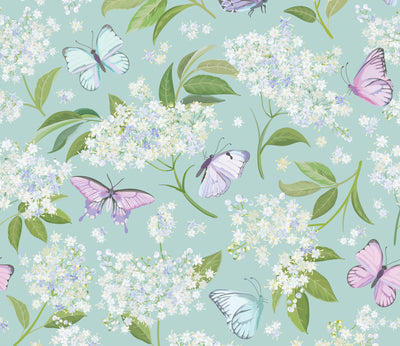
A soft print does quiet work here. Lilac This Space reads as colour rather than pattern once folded sweaters are sitting on it, and Woven Stripe gives texture without competing for attention.
What a liner is really doing in a dresser drawer
Dresser drawers are the other half of this job, and the case is slightly different. A closet shelf is on display every time the door opens; a drawer bottom is only visible when the drawer is nearly empty, so the liner is doing something more practical there.
Most dresser drawer bottoms are thin hardboard, MDF or particleboard, often unfinished on the inside face. That is a rough field to slide folded cotton across. A bonded paper liner gives you a smooth, sealed surface instead, and a renewable one, because the day it stops looking good you are lifting off paper rather than trying to clean board.
Two things worth knowing. Line the bottom only: the sides are vertical, never seen, and papering them buys nothing but extra cuts. And put the seam at the back of the drawer rather than through the middle, where a stack of shirts would sit on it and work at it every time you reach in.
Cloud and Queen Anne's Lace both work well in a small closed box, where a large repeat would be cut in half and lost. If you are lining drawers for the first time, how self-adhesive drawer liner goes in walks through the whole sequence. And if what you actually want is to change the outside of the dresser rather than the inside of it, that is a separate project, covered in wallpapering furniture.
The unscented question, answered plainly
Search for dresser drawer liners and you hit fragrance almost immediately. Lavender. Cedar. Rose. It is one of the biggest corners of the category, so it deserves a straight answer.
Main Street does not make a scented liner. There is no fragrance published on any of these papers, so there is nothing to opt out of. If unscented is what you have been searching for, that is simply what this is.
It also helps to know that most scented liner is a different product entirely. The aromatic cedar version is thin cedar planking that sits loose in the drawer; the perfumed version is fragranced paper meant to be replaced every season. Neither is adhesive. They solve a smell problem, and this solves a surface problem.
One caution: do not add fragrance yourself. Oils and sprays on printed paper are not a published use, and staining a freshly lined drawer to make it smell nice is a poor trade. Use a sachet if you want scent, and let the liner be the liner.
Shoe shelves, high shelves, and where I would stop
A few closet surfaces reward this more than people expect.
The shoe shelf. Grit and scuffing land here harder than anywhere else in the closet. A liner takes that abuse instead of the shelf, and when it has had enough you lift it off and put down a fresh one. Treat it as a consumable layer, not a permanent finish.
The high shelf. Seasonal bins and spare bedding live here, and dust settles undisturbed for months. A light print makes it easier to see what you are reaching for from below, and wiping a sealed printed surface beats wiping bare board.
The linen closet. Same dry, enclosed, low traffic logic, and usually the same melamine shelving, so the same one week corner test applies.
Where I would stop is the closet floor. It takes foot traffic and dragged storage bins, and paper is not the right material for either. I would also stop at any closet that smells damp when you open the door.
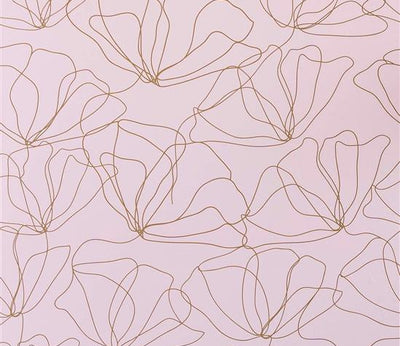
Choosing the print is the enjoyable part, and a closet shelf is a low-risk place to try something you would hesitate to commit to a wall. Founder Jan McCallum trained as an oil painter, and the collections carry that eye, which is why a print like Peony Party holds up at close range in a space you open every morning.
Frequently asked questions
What is a closet liner?
A closet liner is a covering applied to closet shelves, and often to dresser and built-in drawers, so that clothes and stored items rest on a smooth finished surface instead of on bare shelving. Self-adhesive versions bond to the shelf across their whole face, which is what stops them shifting when you slide things in and out.
Do you really need liner in a closet?
You do not need it structurally, since nothing in a closet is going to damage a shelf quickly. It earns its place two other ways: it covers builder-grade melamine that was never meant to be looked at, and it gives shoe shelves and high shelves a replaceable layer that takes scuffing and dust so the shelf underneath does not.
Are Main Street's drawer liners unscented?
Yes. No fragrance is published on any of these papers, and Main Street does not sell a scented version, so there is nothing to opt out of. Most products marketed as scented liner are a different category altogether, either aromatic cedar planking or replaceable perfumed paper, and neither is adhesive.
Can you put contact paper on melamine closet shelves?
Melamine is not on Main Street's published list of best surfaces, which names smooth tile, sealed wood and clean painted drywall. It is smooth and sealed, so it often works, but coatings vary. Apply one sheet in a hidden back corner, leave it a week, then lift it and judge from what you see.
Will a closet liner damage the shelf when it comes off?
It depends heavily on what the shelf is. Sealed and painted surfaces tend to release more cleanly than raw or porous board, and a slow, low-angle pull is easier on any surface than a fast one. Rather than guess, read is contact paper removable, which covers residue and renters properly.
Featured in this article
Shop the wallpapers mentioned above.

Lilac This Space Peel & Stick Wallpaper Sheets – 12 Pack
$30.00
Woven Stripe Peel & Stick Wallpaper Sheets – 12 Pack
$30.00
Cloud Peel & Stick Wallpaper Sheets – 12 Pack
$30.00
Queen Anne's Lace Peel & Stick Wallpaper Sheets – 12 Pack
$30.00
Peony Party Peel & Stick Wallpaper Sheets – 12 Pack
$30.00
Does Shelf Liner Attract Bugs? What Really Draws Pests to Your Shelves

How to Make a Stencil With Contact Paper for Crisp Painted Lines

Chalkboard Paint vs Chalkboard Wallpaper: Which Writable Wall Should You Choose?

How to Do Corners With Contact Paper: Inside, Outside and Rounded Corners

How to Cover a Desk With Contact Paper (and a Table Too)


