


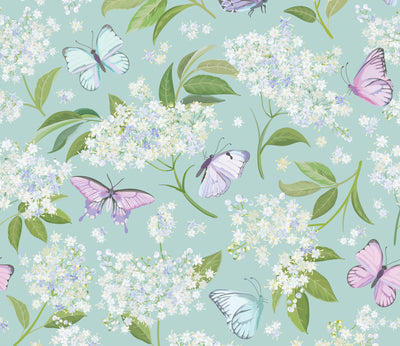
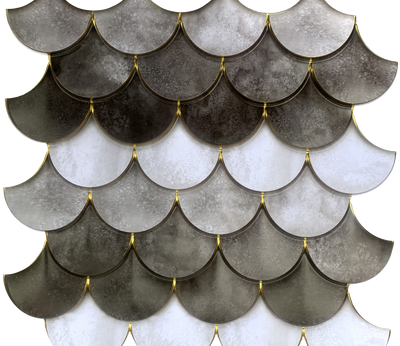
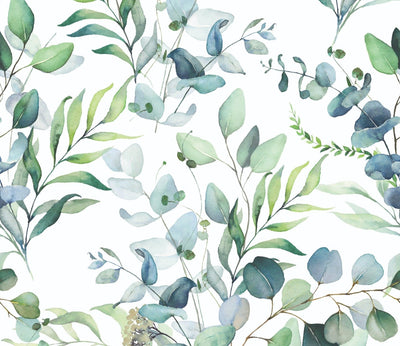
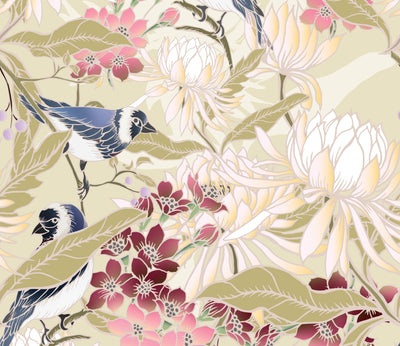

Most craft drawers hide a half-used pack of patterned sheets with no plan attached. That pack is, more or less, craft wallpaper: self-adhesive decorative paper cut to a size you can handle on a kitchen table instead of a ladder. Below you will find what the term means, how the different kinds compare, why a search for arts and crafts wallpaper returns two very different answers, and six small projects for whatever is left in the pack.
What is craft wallpaper?
Craft wallpaper is peel and stick decorative paper sold in sheets small enough to work with by hand, meant for covering objects and small surfaces as much as walls. A roll asks you to plan a room. A crafting wallpaper sheet asks you to plan a notebook, a box lid or one drawer front. The adhesive is already on the back, so there is no paste, no brush and no drying time. You measure, cut, peel and press.
At Main Street the term covers two groups of products. The first is the everyday wallpaper sheets, which the product pages list as peel and stick paper wallpaper at 11 x 16 inches: about 1.22 square feet per sheet, or roughly 14.6 square feet in a 12-pack. That is plenty for a furniture face or a handful of small pieces. The second is a narrower line sold as Peel and Stick Craft Paper, where each sheet is built to do a particular job.
Inside the craft paper line
Sheets you can write on
Chalkboard Classic and Dry Erase Classic are sold as single 11 x 15 inch sheets. The first takes chalk and chalk markers, the second takes dry erase markers, and both product pages recommend sticking them to painted and finished surfaces. One thing Dry Erase Classic is not: a magnet board. It has no metal layer for a magnet to grab, so treat it purely as a writing surface. If you are thinking about a larger chalk wall, our guide to chalkboard wallpaper covers the bigger picture.
Sheets with texture and shine
The Luxury Cardstock group adds raised, embossed texture and a metallic finish. Read each label, because they are not all the same material. Very Crock N Roll and Glow Getter are listed as embossed peel and stick foil, while Natural Reflection is listed as embossed peel and stick paper. The product pages for this group describe the sheets as water-resistant, which makes them the better pick for a desk tray or anything that gets wiped down now and then. Sizes vary by design (Very Crock N Roll and Glow Getter are 10 x 15 inches, other designs differ), so check the dimensions on the exact page before you plan a layout.
Craft paper, wallpaper sheets or contact paper?
People use these names almost interchangeably, and the overlap is real: all three are decorative sheets with adhesive already on the back. Where they part ways is in the details.
- Contact paper is usually sold on a long roll, and a good deal of what is marketed as shelf liner is plastic film rather than paper. Our explainer on what contact paper is goes into the differences.
- Wallpaper sheets are paper printed with repeating patterns, designed to line up edge to edge on a wall but sized so a single pack also stretches to small projects.
- Craft paper, in Main Street's sense, is a sheet with a function: something to write on, or a texture and finish that plain print cannot give you.
A simple rule: if the project is mostly about pattern, reach for wallpaper sheets. If it needs to be written on, or to catch the light, look at the craft paper line.
Arts and crafts wallpaper: one search, two meanings
Type arts and crafts wallpaper into a search bar and the results split down the middle. Half of them mean wallpaper for crafting, as above. The other half mean a design movement. The Arts and Crafts movement took shape in Britain in the second half of the 1800s as a push back against cheap, machine-made goods. Its best-known wallpaper designer, William Morris, had his patterns printed by hand from carved wooden blocks, and they still define the look: winding vines, stylized flowers and leaves, set in earthy greens, ochres and deep blues.
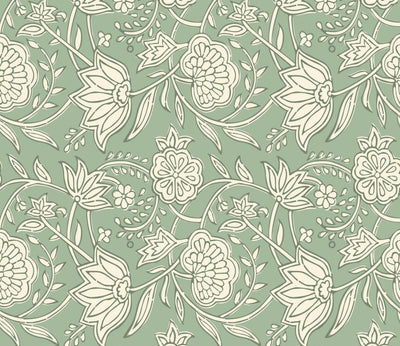
You do not need an antique roll to borrow that feeling. A stylized botanical in a muted palette does most of the work. Our Block Print Floral sheets, cream flowers and trailing stems on a soft sage ground, sit comfortably in that tradition. Busy patterns like this read best in small doses, so try one behind the glass of a display cabinet or across a single drawer front before you cover anything larger.
What to do with leftover wallpaper: six small projects
A wallpaper project almost never ends on the last sheet. If you have already worked through the drawers, trays and frames in our Dollar Tree wallpaper ideas roundup, these six send the scraps somewhere new.
1. Bookmarks with some backbone
Stick a strip of patterned sheet to a strip of plain cardstock, back to back, then trim the two together with a craft knife and a metal ruler. A 2 x 6 inch strip is a comfortable size, and one 11 x 16 sheet yields about ten of them. Punch a hole at the top and add a length of ribbon if you like a tail.
2. Photo booth props and bunting
Embossed sheets make convincing party props because the texture shows up on camera. Mount a sheet on card for stiffness, sketch glasses, a mustache or a bow tie on the backing, cut it out and tape it to a wooden skewer. For bunting, cut matching triangles, punch two holes along the top edge of each and thread them onto string.
3. A desk set that matches
Wrap a cardboard magazine file, a pencil cup and a pen tray in the same pattern and a cluttered desk suddenly looks planned. Smooth, coated surfaces give the adhesive the best grip. Raw cardboard is more absorbent, so test a corner first and press each piece down firmly.
4. A running list inside a door
A narrow strip of Dry Erase Classic inside a pantry or closet door turns into a shopping list or chore chart that never goes missing. Stick it to the smooth, painted face of the door, at eye height, well away from anything damp.
5. Lining a keepsake box
The inside of a lid is a surface almost nobody thinks to decorate, which is exactly why it is fun to open. Measure the base and the lid separately, cut each panel with the backing still on, and press from the center outward. A metallic sheet makes a jewelry box feel more expensive than it was.
6. A test patch before the big wall
Planning an accent wall for later? Put one leftover sheet somewhere discreet on that wall and live with it for a week or two. You will see how the color reads in the evening light and whether your paint and the adhesive get along. Main Street's how-to page asks you to wait at least four weeks after painting, and it steers you away from textured walls, brick, ceilings and damp rooms, so pick a test spot that meets those terms too.
Cutting and sticking small pieces cleanly
Small projects forgive less than walls do, because every edge sits close to the eye. A few habits make the difference:
- Cut with the backing on. The liner keeps the adhesive clean and gives the blade something firm to work against. A sharp craft or utility knife, a metal ruler and a cutting mat beat scissors for straight lines.
- Clean first. Main Street's prep step is a wipe with a damp cloth. For a deeper clean, the how-to page suggests 30% isopropyl alcohol to 70% water, then letting the surface dry completely.
- Soften the corners. On anything that gets handled, such as bookmarks or box lids, a slightly rounded corner is less likely to catch and lift than a sharp one.
- Press from the middle out. A smoothing tool, or the edge of an old plastic card, chases air toward the edges instead of trapping it.
- Keep paper projects dry. The paper wallpaper sheets are not sold as water-resistant, so keep them away from sinks, steam and anything headed for a dishwasher.
Bigger ambitions? Our furniture guide walks through dressers, tables and cabinet fronts.
Frequently asked questions
What is craft wallpaper?
Craft wallpaper is self-adhesive decorative paper sold in hand-sized sheets for small projects: covering boxes, notebooks, drawer fronts and shelf backs, as well as small areas of wall. The adhesive is pre-applied, so you cut it to size, peel off the backing and press it down. No paste, glue or drying time is involved.
Can you use wallpaper for crafts?
Yes. Peel and stick wallpaper sheets are well suited to crafts because they are already sized for small work and need no glue. Cut them with a sharp knife while the backing is still attached, stick them to clean, smooth surfaces, and keep paper projects away from water. Test absorbent materials like raw cardboard on a corner first.
What can I do with leftover wallpaper?
Leftover sheets are ideal for bookmarks, party props and bunting, a matching desk set, the lining of a keepsake box, or labels and lists. You can also stick one sheet on a wall you are thinking of covering and live with it for a while, which shows you the color in your own light before you commit to a bigger project.
Is craft paper the same as contact paper?
Not quite. Both have adhesive on the back, but contact paper is usually sold on a roll and is often a plastic film, while craft paper sheets are designed around a purpose, such as a chalkboard or dry erase surface, or an embossed metallic finish. Check each product page for the material, because it varies between lines.
What is Arts and Crafts style wallpaper?
It is wallpaper in the style of the Arts and Crafts movement, which began in Britain in the late 1800s. Designers such as William Morris favored hand block printing and nature-based patterns: twisting vines, stylized flowers and leaves, in earthy greens, golds and blues. Modern botanical prints in muted colors are an easy way to borrow the look.
Featured in this article
Shop the wallpapers mentioned above.


What Is Craft Wallpaper? Craft Paper Explained, Plus 6 Projects for Leftover Sheets

Wallpaper for a Dining Room: 4 Ideas With Peel and Stick Sheets

Kids Room Wallpaper Ideas: Peel and Stick Sheets From Nursery to Tween

Fall Craft Ideas for Adults: 6 Paper Projects for a Cozy Home

What Is Peel and Stick Wallpaper? How It Works, Explained


