




MS Creations

Peel and Stick Wallpaper Ideas for Every Room in Your Home
Your walls are the biggest blank canvas in your home, and they deserve better than beige. The best peel and stick wallpaper ideas work room by room, matching pattern and mood to how you actually live: bold where you want energy, soft where you want rest. And because every Main Street design is removable, you can experiment freely. No drills, no contractors, no compromises. Maybe you grabbed a single sheet on a Dollar Tree run and liked how it looked enough to wonder what a whole room would feel like, those are our sheets on that shelf, and this is where the full collection lives, every pattern in stock instead of just the one or two that happened to be in the aisle. Below is a room-by-room walk through your whole home, with one concrete idea for each space and the kind of look that suits it best, so you can find the right starting point no matter which wall you are staring at right now.
Start with an accent wall
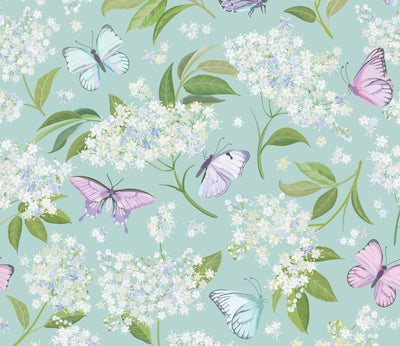
If you are new to wallpaper, an accent wall is the easiest place to begin. You commit to a single wall, usually the one your eye lands on first when you walk in, and let it carry the pattern while the rest of the room stays calm. The payoff is dramatic; the effort is one quiet afternoon. The strongest accent wall ideas lean into contrast: a maximalist floral behind a bed, a moody botanical behind a sofa, a graphic print in a narrow hallway that would feel like too much spread across four walls. Because the panels lift away cleanly, an accent wall is also the most renter-friendly move in the book, low commitment, high reward, and fully reversible. Try our bold, multicolor Vibrant Flowers when you want a single wall to do all the talking.
Living room wallpaper ideas
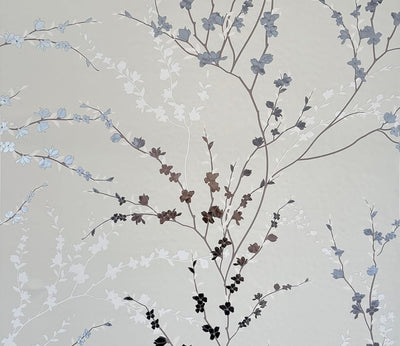
The living room is where guests form their first impression, so it rewards a little confidence. A patterned wall behind the sofa or framing the fireplace gives the whole space a focal point without rearranging a single stick of furniture. If your sofa and rug are neutral, this is your chance to introduce color and pattern where it will be seen the most. A teal-blue print like Magnolia Branches brings depth and a hand-painted softness that reads as expensive rather than loud, the kind of detail people assume took a designer. Prefer something lush and immersive? A wall of greenery makes a city apartment feel like it has a garden just out back, and it pairs effortlessly with the plants you already own.
Bedroom wallpaper ideas
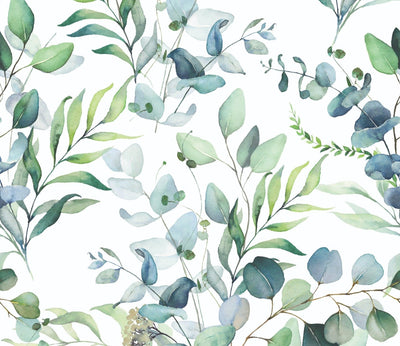
Your bedroom should feel like an exhale. The most restful bedroom wallpaper ideas favor soft, organic patterns over high-contrast graphics: think calming botanicals, muted florals, and quiet repeats that do not compete with sleep. The wall behind your headboard is the natural showcase, framing the bed the way a mat frames a painting. A gentle neutral like Eucalyptus wraps the room in something serene and spa-like, while a painterly bloom like Peony Party adds romance without tipping into saccharine. Want a full walkthrough of styles, color choices, and headboard layouts? See our deeper guide to bedroom accent wall ideas.
Kids' room and nursery
Children's spaces are where you get to be playful, and removable wallpaper is tailor-made for rooms that change fast. A nursery can grow up; a toddler's dinosaur phase does not have to be permanent. Pick something cheerful but not chaotic, a print that reads sweet at six months and still works at six years, so you are not re-decorating every birthday. A leafy green Plant Wall turns a nursery into a storybook forest, and when the theme inevitably changes, the wall can change with it in an afternoon. Just give it a smooth, clean, dry wall to grip, and you have a look that keeps up with whatever phase comes next.
Kitchen
Kitchens are working rooms, but they do not have to be sterile. The smartest move here is small and high-impact: a single open-shelf wall, the inside of a glass-front cabinet, the back of a hutch, or a pop of pattern in a breakfast nook where you actually sit. You can also reface tired cabinet doors entirely, a budget upgrade that completely changes the room; our guide to wallpapering cabinets walks through that renter-safe trick step by step. If you are after a true backsplash look, our peel and stick tiles are the right tool for that wall, framed as a decorative feature kept out of the direct splash and heat zone; see our take on kitchen backsplash ideas. Either way, keep wallpaper sheets to dry display spots and well away from the zone directly behind the cooktop and sink, where heat and constant splashing are not their friends.
Bathroom
A powder room is one of the most rewarding rooms to decorate, precisely because it is small. A bold pattern that might overwhelm a bedroom feels confident and complete in a half bath, and guests always notice. For bathroom walls, reach for our peel and stick tiles rather than the wallpaper sheets: treat them as a decorative feature on a dry vanity or accent wall, kept well away from the shower, tub, and any direct water spray. Peel and stick sheets are designed for dry, low-moisture spots only, so they are not the pick for splash zones, shower surrounds, or tub surrounds. In a well-ventilated powder room or half bath without a shower or tub, you can still create a genuine moment: run the fan, let the room dry out between uses, and keep everything away from standing water. For our full set of dos and don'ts, including which walls to choose, which to skip, and how to handle humidity, read up on using it in the bathroom.
Laundry room and mudroom
Here is the secret the design magazines keep: the rooms nobody photographs are the most fun to decorate. Laundry room wallpaper is a small, low-stakes upgrade that pays off every single day, because suddenly the least glamorous chore happens in the prettiest room in the house. A mudroom bench wall, or the space above the washer and dryer, is the perfect canvas for something joyful you would never dare put in the living room. Just keep it a dry, decorative accent, away from the sink, the appliances, and any moisture. Go bold here, you have permission. A burst of Vibrant Flowers makes folding towels feel almost ceremonial, and the removable panels hold up beautifully on a smooth, dry wall in a hardworking room.
Home office
If you spend hours at a desk, the wall behind you matters more than you think, especially the one your camera sees on every video call. A considered backdrop signals care without you saying a word, and it quietly upgrades every meeting. Choose a pattern with enough interest to flatter a webcam but enough calm to keep you focused instead of distracted. A soft botanical reads as polished and put-together; a deeper, painterly print like Peony Party brings personality to an otherwise practical corner. The bonus for renters and movers alike: when you change desks or change homes, the wall comes right with you.
Entryway
The entryway is a small space that does outsized work; it sets the tone for everything beyond it. Because hallways and foyers are often narrow and short on natural light, they are perfect for a print with some drama, a place to make a statement before anyone reaches the rest of your home. You are only passing through, so you can be bolder here than in a room where you linger for hours. A lush, immersive design like Plant Wall greenery makes a tight entry feel like an arrival rather than an afterthought. One wall is usually all it takes to transform the whole first impression.
One last word on choosing
The thread running through every room above is the same: start with how you want the space to feel, then choose the pattern that delivers it. Energizing rooms can take bold color and big, confident repeats; restful rooms want softness and breathing room. A few simple cues help:
Want energy? Reach for maximalist florals and saturated color, ideal for entryways, powder rooms, and laundry rooms.
Want calm? Choose soft botanicals and muted neutrals, perfect for bedrooms and home offices.
Renting? Stick to a single accent wall so removal at move-out is quick and deposit-safe.
Every Main Street design is carefully curated, never mass-produced, so whichever direction you go, you are choosing something made with intention, and something you can happily change your mind about later.
Frequently asked questions
What rooms can you use peel and stick wallpaper in?
Nearly every room: living rooms, bedrooms, kids' rooms, kitchens, laundry rooms, home offices, and entryways all work beautifully, and a well-ventilated powder room or half bath can work too. The main requirement is a smooth, clean, dry wall, and peel and stick sheets are not recommended for damp or moisture-exposed surfaces. For bathroom and kitchen walls, our peel and stick tiles are the better fit, used as a decorative feature kept away from direct water spray and high heat, like the area right behind a shower head or cooktop.
Is peel and stick wallpaper renter friendly?
Yes. Peel and stick wallpaper is designed to be removable, so it lifts away cleanly when you move out without damaging paint or costing your deposit. It is the renter's favorite way to add real personality to a space, and you can take the look with you to your next place.
I picked up a sheet at Dollar Tree, can I find more of these here?
You can. The peel and stick sheets that turn up at Dollar Tree are Main Street's, so what you brought home is exactly what you would get here. The difference is that a store shelf only carries a handful at a time, while the full collection lives here, enough variety to actually plan room by room instead of building a whole house around the one or two prints that happened to be in stock. If you want to match that first sheet, or branch into something bolder like Friendly Flowers for a louder room, you can do it all in one place.
Where should you not use peel and stick wallpaper?
Avoid surfaces that stay wet or very hot: directly behind a cooktop, inside a shower, or on any wall with constant splashing. Skip textured, freshly painted, or dusty walls too, since the panels need a smooth, fully cured, clean surface to grip. A quick wipe-down first goes a long way.

Tile Wallpaper, Explained: Looks, Rooms & Over-Tile Tips
Walls are design opportunities, and so, it turns out, are floors and backsplashes. Tile wallpaper is the shorthand for peel-and-stick tiles that mimic the look of real ceramic, stone, or cement tile, without the grout, the wet saw, or the contractor's invoice. If you've been eyeing a fresh kitchen backsplash or a bathroom that feels a little less builder-grade, this is the no-drills way in. Here's what tile wallpaper actually is, the looks worth knowing, the rooms it suits, and honest answers to the two questions everyone asks: can you go over existing tile, and can you use it where tile would normally go.
What tile wallpaper actually is
Despite the name, tile wallpaper isn't paper at all in the way a roll of floral print is. It's a peel-and-stick tile, usually a small square panel with an adhesive back, printed with a convincing tile pattern and often given a slight sheen or raised texture to catch light the way glazed ceramic does. You peel, you place, you press. No mortar, no spacers, no curing time.
The appeal is mostly practical. Real tile is permanent, messy to install, and a genuine problem when you rent. Peel-and-stick wallpaper tiles give you the visual payoff of a tiled surface in an afternoon, and most lift off cleanly when you're done. They're carefully curated rather than mass-produced, which matters when a pattern is going to sit at eye level every morning while you make coffee.
The looks worth knowing
Most of the patterns people reach for trace back to a handful of classic tile traditions. You don't have to memorize them, but knowing the vocabulary helps you describe what you're after.
Subway — the rectangular, gridded look borrowed from early transit stations. Clean, timeless, and forgiving. White subway-style wallpaper tiles read as crisp and neutral, which is why they anchor so many kitchens.
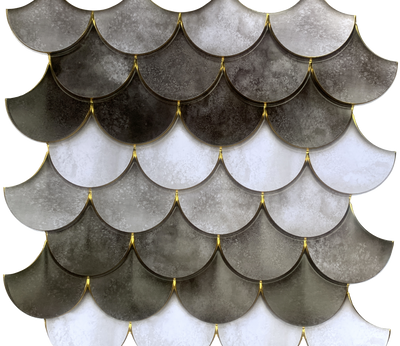
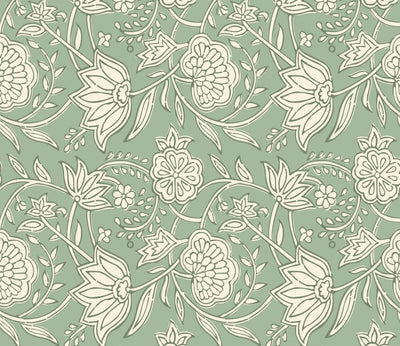
Moroccan and Spanish — ornamental, often symmetrical patterns with a hand-painted feel. An ornamental tile look brings movement to a flat wall without overwhelming it. This is where moroccan tile wallpaper earns its keep, in entryways and powder rooms that can carry a little drama.
Hexagon and mosaic — small geometric pieces, honeycomb or pebbled. A white-and-silver hexagon tile look feels current without chasing a trend that'll date, while a softer white-and-silver stone mosaic reads more like inlay than grid.
Graphic black-and-white — high contrast, confident. A black-and-white mosaic tile look works when you want the wall itself to be the statement.
Herringbone — angled tiles in a woven zigzag. A warm earth-toned herringbone tile look adds warmth and texture, a quiet choice that still does a lot of work.
If you'd rather browse by pattern than by theory, our full roundup of tile-look designs walks through each style with more visuals. Think of this article as the map, and that one as the gallery.
Which rooms suit tile wallpaper
Tile wallpaper shines wherever real tile would look at home but a full install feels like overkill. A few rooms reward it especially well.
Kitchen backsplash
The strip of wall between counter and cabinets is the classic candidate. It's vertical, mostly protected from standing water, and small enough that a few packs cover it. Subway tile wallpaper here is a reliable starting point, though a mosaic or herringbone adds personality. Keep it a few inches clear of the cooktop and direct flame, and you've got a backsplash that took an afternoon. For layouts and more ideas, see our guide to kitchen backsplash ideas.
Bathroom
Bathrooms love tile wallpaper on the right surfaces: behind the sink, around a mirror, on a feature wall away from the shower spray. Steam and humidity are the variables to respect, so prioritize ventilation and keep panels out of zones that get genuinely wet. Our bathroom tile wallpaper ideas cover where it holds up and where to hold back.
Entryway, laundry, and mudroom
These are the rooms that rarely get a budget but see constant traffic. A patterned entry wall greets you with intention. A laundry nook in a cheerful mosaic makes a chore feel less like one. Because these spaces are small, they're a low-stakes place to try a bolder look you might not commit to elsewhere.
Can you wallpaper over tiles?
This is the big one, so here's the direct answer: yes, you usually can wallpaper over existing tile, and tile wallpaper is one of the better candidates for it. The catch is the grout lines. Every recessed grout joint is a small valley the adhesive has to bridge, and on heavily textured or deeply grooved tile, those lines can telegraph through or create weak spots where the panel lifts.
So can you wallpaper over tiles successfully? Set yourself up well:
Choose flatter tile. Smooth, glossy tile with thin grout lines is the easiest base. Hand-molded or rustic tile with deep joints is the hardest.
Clean and degrease thoroughly. Bathroom and kitchen tile carries an invisible film. Wipe it down, let it dry completely, and the adhesive will grip far better.
Press into the grout lines. Work the panel down with firm, deliberate pressure so it follows the surface rather than tenting over the gaps.
Test a small area first. Apply one panel, leave it a day or two, and check the edges before committing to the whole wall.
Go slow on heavily textured or delicate surfaces, and set realistic expectations: tile wallpaper hides a dated backsplash beautifully, but it isn't a structural fix for crumbling grout or loose tile underneath.
Can you use tile wallpaper instead of real tile?
Often, yes, with a clear sense of where the line is. Tile wallpaper is a finish, not a waterproofing system. It's an excellent stand-in anywhere the surface stays mostly dry and isn't taking abuse: a backsplash, a feature wall, the riser of a stair, a powder-room accent. Those are exactly the places where the question "can you tile over wallpaper" usually comes up in reverse, and the honest framing is that you're decorating a surface, not building a wet wall.
Where it isn't a substitute: inside a shower enclosure, on a floor that gets walked on, or any surface in constant contact with water. Real tile exists for those jobs for a reason. Use tile wallpaper where you want the look and the flexibility, and reach for the real thing where waterproofing and durability are non-negotiable.
The flip side, and the reason renters love it: because it's removable, you get the tiled aesthetic without altering the wall permanently. No drills, no contractors, no compromises, and no awkward conversation with a landlord about your security deposit.
One quick point of clarity, since it trips people up: the tile-look panels in this article are their own product, separate from our peel-and-stick wallpaper sheets — and it's those sheets, not the tiles, that you may have come across at Dollar Tree. If that's what brought you here, the sheet range lives on our site in full and stays in stock, including stone-leaning designs like stacked stone and Carrara marble that sit happily next to a tiled backsplash, plus florals, botanicals, and graphic prints for the walls around it.
Does it actually look like tile?
Better than you'd expect, and the gap keeps closing. The best peel-and-stick tiles use printed depth, subtle sheen, and slight texture so the eye reads dimension, not a flat photo. The PVC-free papers we favor hold color the way the pages of a good art book do, with richness rather than plasticky glare. From a step back, in normal lighting, most people won't clock it as wallpaper.
Up close, the tells are the seams between panels and the lack of real grout depth. You minimize both with careful alignment and clean surface prep. Choose a forgiving pattern, take your time on the layout, and the result is convincing enough to do exactly what it's there to do: make a room feel considered.
Frequently asked questions
Can you put peel and stick tile wallpaper over existing tile?
Yes, in most cases. Tile wallpaper goes over existing tile well when the surface is smooth, clean, and grease-free. The main challenge is grout lines, which can show through on deeply grooved tile. Press panels firmly into the joints, degrease the surface first, and test one panel before doing the whole wall.
Can you use tile wallpaper instead of real tile?
For dry, low-abuse surfaces like backsplashes, feature walls, and powder rooms, yes. Tile wallpaper is a finish, not a waterproofing system, so it isn't a substitute inside showers, on floors, or anywhere in constant contact with water. Use it where you want the look and flexibility, and real tile where durability is essential.
Does peel and stick tile wallpaper look real?
From a normal viewing distance, very much so. Quality tile wallpaper uses printed depth, subtle sheen, and light texture to mimic real ceramic or stone. The giveaways up close are panel seams and the absence of true grout depth, both of which careful alignment and clean surface prep keep to a minimum.
Which rooms is tile wallpaper best for?
Kitchens (as a backsplash), bathrooms on drier walls away from the shower, entryways, laundry rooms, and mudrooms. It suits any space where real tile would look at home but a full installation feels excessive. Prioritize good ventilation in humid rooms and keep panels clear of direct heat and standing water.
Are the tile wallpapers the ones sold at Dollar Tree?
Not quite — it's worth separating the two. The peel-and-stick wallpaper sheets are the ones you'll find at Dollar Tree, and those are ours. The tile-look panels covered in this article are a different product line, sold only through Main Street. So if you spotted the sheets in store, you can browse the whole sheet collection here with stock you can count on; and when you want the tiled look specifically, the tile panels are right alongside them.

Bathroom Tile Wallpaper Ideas: Subway, Moroccan, Spanish & More
Refresh bathroom tile without renovation. Subway, Moroccan, Spanish, marble — peel and stick tile wallpaper ideas with style picks, install tips, and durability notes.

Peel and Stick vs Traditional Wallpaper: Which Should You Choose?
Cost, install time, durability, removability — head-to-head comparison of peel and stick versus traditional wallpaper. Honest recommendations for renters, homeowners, and pros.

How Long Does Peel and Stick Wallpaper Last? Care & Maintenance Guide
Properly installed peel and stick wallpaper lasts 5+ years indoors. What shortens lifespan, how to clean it without damage, and when to replace versus repair.

How to Prep Your Walls for Peel and Stick Wallpaper
Wall prep makes or breaks your install. Cleaning, sanding, priming, and tools — the complete checklist for a flawless peel and stick wallpaper job.

How to Apply Peel and Stick Wallpaper Like a Pro (No Pro Required)
Step-by-step install guide: tools, wall prep, plumb line, peel and smooth technique, corner handling, and bubble fixes. The complete pro workflow for first-timers.

Peel and Stick Wallpaper in the Bathroom: What Works (and What Doesn't)
Yes, peel and stick wallpaper works in bathrooms — but only in the right zones. Smart picks for dry walls, vanity backsplashes, and where to use tiles instead.

Does Peel and Stick Wallpaper Work on Textured Walls?
Yes — but only on lightly textured walls (orange peel) with primer. Honest guide on what works, what doesn't, and the best patterns to hide texture.
Recent posts

Shelf liner does not pull bugs into a...

A store-bought stencil gives you someone else's lettering...

A writable wall starts in one of two...


