



Walls are design opportunities, and so, it turns out, are floors and backsplashes. Tile wallpaper is the shorthand for peel-and-stick tiles that mimic the look of real ceramic, stone, or cement tile, without the grout, the wet saw, or the contractor's invoice. If you've been eyeing a fresh kitchen backsplash or a bathroom that feels a little less builder-grade, this is the no-drills way in. Here's what tile wallpaper actually is, the looks worth knowing, the rooms it suits, and honest answers to the two questions everyone asks: can you go over existing tile, and can you use it where tile would normally go.
What tile wallpaper actually is
Despite the name, tile wallpaper isn't paper at all in the way a roll of floral print is. It's a peel-and-stick tile, usually a small square panel with an adhesive back, printed with a convincing tile pattern and often given a slight sheen or raised texture to catch light the way glazed ceramic does. You peel, you place, you press. No mortar, no spacers, no curing time.
The appeal is mostly practical. Real tile is permanent, messy to install, and a genuine problem when you rent. Peel-and-stick wallpaper tiles give you the visual payoff of a tiled surface in an afternoon, and most lift off cleanly when you're done. They're carefully curated rather than mass-produced, which matters when a pattern is going to sit at eye level every morning while you make coffee.
The looks worth knowing
Most of the patterns people reach for trace back to a handful of classic tile traditions. You don't have to memorize them, but knowing the vocabulary helps you describe what you're after.
- Subway — the rectangular, gridded look borrowed from early transit stations. Clean, timeless, and forgiving. White subway-style wallpaper tiles read as crisp and neutral, which is why they anchor so many kitchens.
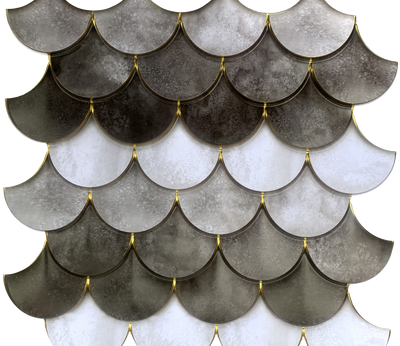
- Moroccan and Spanish — ornamental, often symmetrical patterns with a hand-painted feel. An ornamental tile look brings movement to a flat wall without overwhelming it. This is where moroccan tile wallpaper earns its keep, in entryways and powder rooms that can carry a little drama.
- Hexagon and mosaic — small geometric pieces, honeycomb or pebbled. A white-and-silver hexagon tile look feels current without chasing a trend that'll date, while a softer white-and-silver stone mosaic reads more like inlay than grid.
- Graphic black-and-white — high contrast, confident. A black-and-white mosaic tile look works when you want the wall itself to be the statement.
- Herringbone — angled tiles in a woven zigzag. A warm earth-toned herringbone tile look adds warmth and texture, a quiet choice that still does a lot of work.
If you'd rather browse by pattern than by theory, our full roundup of tile-look designs walks through each style with more visuals. Think of this article as the map, and that one as the gallery.
Which rooms suit tile wallpaper
Tile wallpaper shines wherever real tile would look at home but a full install feels like overkill. A few rooms reward it especially well.
Kitchen backsplash
The strip of wall between counter and cabinets is the classic candidate. It's vertical, mostly protected from standing water, and small enough that a few packs cover it. Subway tile wallpaper here is a reliable starting point, though a mosaic or herringbone adds personality. Keep it a few inches clear of the cooktop and direct flame, and you've got a backsplash that took an afternoon. For layouts and more ideas, see our guide to kitchen backsplash ideas.
Bathroom
Bathrooms love tile wallpaper on the right surfaces: behind the sink, around a mirror, on a feature wall away from the shower spray. Steam and humidity are the variables to respect, so prioritize ventilation and keep panels out of zones that get genuinely wet. Our bathroom tile wallpaper ideas cover where it holds up and where to hold back.
Entryway, laundry, and mudroom
These are the rooms that rarely get a budget but see constant traffic. A patterned entry wall greets you with intention. A laundry nook in a cheerful mosaic makes a chore feel less like one. Because these spaces are small, they're a low-stakes place to try a bolder look you might not commit to elsewhere.
Can you wallpaper over tiles?
This is the big one, so here's the direct answer: yes, you usually can wallpaper over existing tile, and tile wallpaper is one of the better candidates for it. The catch is the grout lines. Every recessed grout joint is a small valley the adhesive has to bridge, and on heavily textured or deeply grooved tile, those lines can telegraph through or create weak spots where the panel lifts.
So can you wallpaper over tiles successfully? Set yourself up well:
- Choose flatter tile. Smooth, glossy tile with thin grout lines is the easiest base. Hand-molded or rustic tile with deep joints is the hardest.
- Clean and degrease thoroughly. Bathroom and kitchen tile carries an invisible film. Wipe it down, let it dry completely, and the adhesive will grip far better.
- Press into the grout lines. Work the panel down with firm, deliberate pressure so it follows the surface rather than tenting over the gaps.
- Test a small area first. Apply one panel, leave it a day or two, and check the edges before committing to the whole wall.
Go slow on heavily textured or delicate surfaces, and set realistic expectations: tile wallpaper hides a dated backsplash beautifully, but it isn't a structural fix for crumbling grout or loose tile underneath.
Can you use tile wallpaper instead of real tile?
Often, yes, with a clear sense of where the line is. Tile wallpaper is a finish, not a waterproofing system. It's an excellent stand-in anywhere the surface stays mostly dry and isn't taking abuse: a backsplash, a feature wall, the riser of a stair, a powder-room accent. Those are exactly the places where the question "can you tile over wallpaper" usually comes up in reverse, and the honest framing is that you're decorating a surface, not building a wet wall.
Where it isn't a substitute: inside a shower enclosure, on a floor that gets walked on, or any surface in constant contact with water. Real tile exists for those jobs for a reason. Use tile wallpaper where you want the look and the flexibility, and reach for the real thing where waterproofing and durability are non-negotiable.
The flip side, and the reason renters love it: because it's removable, you get the tiled aesthetic without altering the wall permanently. No drills, no contractors, no compromises, and no awkward conversation with a landlord about your security deposit.
One quick point of clarity, since it trips people up: the tile-look panels in this article are their own product, separate from our peel-and-stick wallpaper sheets — and it's those sheets, not the tiles, that you may have come across at Dollar Tree. If that's what brought you here, the sheet range lives on our site in full and stays in stock, including stone-leaning designs like stacked stone and Carrara marble that sit happily next to a tiled backsplash, plus florals, botanicals, and graphic prints for the walls around it.
Does it actually look like tile?
Better than you'd expect, and the gap keeps closing. The best peel-and-stick tiles use printed depth, subtle sheen, and slight texture so the eye reads dimension, not a flat photo. The PVC-free papers we favor hold color the way the pages of a good art book do, with richness rather than plasticky glare. From a step back, in normal lighting, most people won't clock it as wallpaper.
Up close, the tells are the seams between panels and the lack of real grout depth. You minimize both with careful alignment and clean surface prep. Choose a forgiving pattern, take your time on the layout, and the result is convincing enough to do exactly what it's there to do: make a room feel considered.
Frequently asked questions
Can you put peel and stick tile wallpaper over existing tile?
Yes, in most cases. Tile wallpaper goes over existing tile well when the surface is smooth, clean, and grease-free. The main challenge is grout lines, which can show through on deeply grooved tile. Press panels firmly into the joints, degrease the surface first, and test one panel before doing the whole wall.
Can you use tile wallpaper instead of real tile?
For dry, low-abuse surfaces like backsplashes, feature walls, and powder rooms, yes. Tile wallpaper is a finish, not a waterproofing system, so it isn't a substitute inside showers, on floors, or anywhere in constant contact with water. Use it where you want the look and flexibility, and real tile where durability is essential.
Does peel and stick tile wallpaper look real?
From a normal viewing distance, very much so. Quality tile wallpaper uses printed depth, subtle sheen, and light texture to mimic real ceramic or stone. The giveaways up close are panel seams and the absence of true grout depth, both of which careful alignment and clean surface prep keep to a minimum.
Which rooms is tile wallpaper best for?
Kitchens (as a backsplash), bathrooms on drier walls away from the shower, entryways, laundry rooms, and mudrooms. It suits any space where real tile would look at home but a full installation feels excessive. Prioritize good ventilation in humid rooms and keep panels clear of direct heat and standing water.
Are the tile wallpapers the ones sold at Dollar Tree?
Not quite — it's worth separating the two. The peel-and-stick wallpaper sheets are the ones you'll find at Dollar Tree, and those are ours. The tile-look panels covered in this article are a different product line, sold only through Main Street. So if you spotted the sheets in store, you can browse the whole sheet collection here with stock you can count on; and when you want the tiled look specifically, the tile panels are right alongside them.
Featured in this article
Shop the wallpapers mentioned above.

White Subway Peel and Stick Wallpaper Tiles - 24 Pack
$40.00
White Silver Inlay Peel and Stick Wallpaper Tiles - 24 Pack
$40.00
White Silver Hexagon Peel and Stick Wallpaper Tiles - 24 Pack
$40.00
Black and White Mosaic Peel and Stick Wallpaper Tiles - 24 Pack
$40.00
Earth Herringbone Peel and Stick Wallpaper Tiles - 24 Pack
$40.00
Does Shelf Liner Attract Bugs? What Really Draws Pests to Your Shelves

How to Make a Stencil With Contact Paper for Crisp Painted Lines

Chalkboard Paint vs Chalkboard Wallpaper: Which Writable Wall Should You Choose?

How to Do Corners With Contact Paper: Inside, Outside and Rounded Corners

How to Cover a Desk With Contact Paper (and a Table Too)


