






The wall behind your bed does more than hold up the headboard. It sets the mood for the whole room, and it's the one surface you see first thing every morning and last thing every night. The fastest way to give it real presence? Navy blue peel and stick wallpaper for bedroom walls turns a flat, forgettable backdrop into a deep, cocooning focal point you can put up in an afternoon. No drills, no contractors, no compromises. Just a free weekend and a clear idea of the room you want to wake up in.
Below is how to think about a bedroom accent wall as a weekend project: which wall to choose, the looks worth committing to, and how to do it all without losing your deposit.
Start by choosing the right wall
An accent wall works because it gives your eye somewhere to land. In a bedroom, that place is almost always behind the bed. The headboard wall is the natural anchor of the room, the surface your furniture already points toward, and the one with the fewest doors and windows to work around. Wallpaper it, and the bed instantly reads as intentional rather than just parked against drywall.
That said, the headboard wall isn't your only option. Consider where your eye goes when you walk in. A few alternatives worth weighing:
- The wall facing the door — if you don't see the bed first, you'll see this. Great for a print with a little drama.
- A nook or alcove — a recessed wall practically frames itself, so even a busy pattern feels contained.
- The wall behind a dresser or desk — useful in a bedroom that does double duty as a workspace.
Pick one wall and commit. The whole point of an accent wall is contrast, so let the other three stay quiet. If you want help thinking through the rest of the house, our guide to ideas for every room is a good place to wander next.
Go moody: navy and other deep tones
There's a reason designers keep reaching for navy in bedrooms. Deep blue absorbs light instead of bouncing it around, which makes a room feel enveloping and calm — exactly what you want from the space where you sleep. A moody bedroom wallpaper behind the headboard reads as sophisticated rather than stark, and navy plays beautifully with warm metals, natural wood, and crisp white linens.
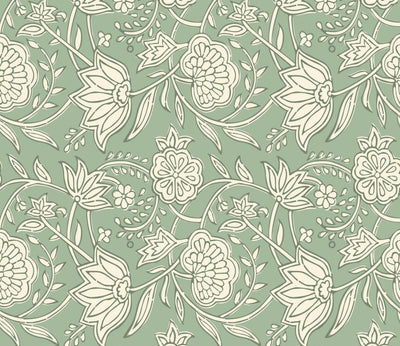
If you want structure with your color, an art-deco geometric like Indigo Diamonds pairs navy with brass for a look that feels tailored, almost like a well-made suit. Prefer something with more ornament? The You Do Blue medallion print carries the same depth with a softer, more traditional rhythm.
A few things to keep in mind when you go dark:
- Deep tones can make a small room feel smaller — or cozier. Decide which you're after before you buy.
- Balance the dark wall with lighter bedding, a pale rug, or a mirror to keep the room from feeling like a cave.
- Layer in warm light. A single overhead bulb flattens navy; a couple of bedside lamps make it glow.
Or go calm: botanicals for a restful room
Not every accent wall needs to be dramatic. If your idea of a good night's sleep is a room that feels like a slow exhale, lean into botanicals. Leaves, sprigs, and blossoms bring the outdoors in without shouting, and they pair with just about any bedding you already own.
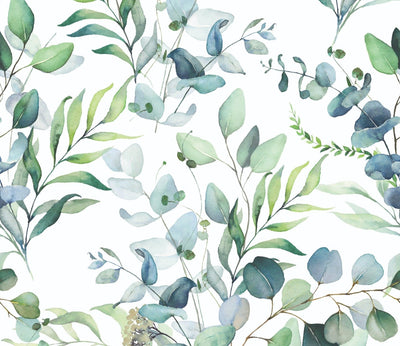
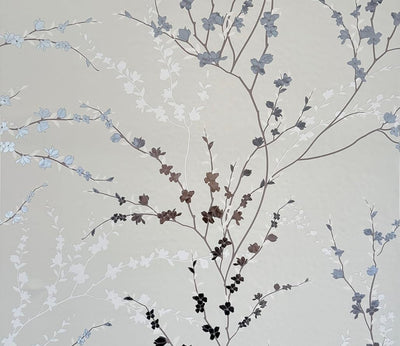
For something genuinely soothing, Eucalyptus offers soft, sage-toned sprigs that read almost as a neutral — quiet enough to live with for years. If you'd rather keep the calming blue palette without going full navy, Free Spirit brings a light, airy nature print in pale blue. And for a touch more color, the teal-blue Magnolia Branches design splits the difference between moody and restful with white blossoms over a deep, watery ground.
One quiet bonus: our paper is PVC-free, the kind you'd find in your favorite art books. That matters more in a bedroom than anywhere else, since it's the room you spend a third of your life breathing in.
A note on the ceiling
You may have seen the "fifth wall" trend, where the ceiling gets papered too. It's worth flagging that Main Street's own application guidance lists ceilings as a surface to avoid: because the adhesive is fighting gravity, ceilings tend to compromise adhesion and can lead to peeling or sagging over time. If you love the look, we'd point you to a painted ceiling or a professionally installed traditional wallpaper instead, and keep the peel-and-stick sheets on the walls where they hold best.
If you decide to try it anyway despite that guidance, go in with eyes open. A few honest notes:
- Bring a helper. Smoothing sheets overhead is a two-person job, and gravity is not on your side.
- Keep the pattern simple. A small repeat or a subtle texture is far more forgiving overhead than a large, directional print.
- Test a single sheet first. Confirm it adheres well before you commit to the whole ceiling.
If you want that tucked-under-a-canopy feeling without going overhead, a calming botanical carried up the headboard wall (and even onto the adjacent wall) is a safer way to get there — all on the vertical surfaces where the sheets are designed to hold.
Carve out a reading nook
If your bedroom has a chair in the corner or a window seat that never quite became the cozy retreat you pictured, a small papered wall behind it can finish the thought. You don't need to cover much — even the width behind a single armchair is enough to define the spot as its own little room-within-a-room.
This is where a slightly bolder print earns its keep. A nook is small and self-contained, so a pattern that might overwhelm a full wall feels just right in a tight frame. Add a lamp, a throw, and a shelf for whatever you're reading, and you've made a destination out of a forgotten corner. It's a satisfying half-day project that pairs naturally with whatever you've chosen for the headboard wall.
Putting it up over a weekend — and taking it down later
The reason an accent wall is a weekend job and not a renovation is the material itself. Peel and stick wallpaper goes up dry, repositions while you work, and comes off when you're done with it. Prep a clean, smooth wall, line up your first sheet plumb, and smooth as you go from the center out. For the full play-by-play, follow our step-by-step guide to how to apply it.
For renters, the takeaway worth repeating: this is removable and designed to be deposit-friendly. Pull it slowly at a low angle when your lease is up or your taste changes, and the wall underneath stays intact. Go gentle on freshly painted or delicate surfaces, and always test a small area in an inconspicuous spot first so you know exactly how it behaves on your particular wall. We get into the specifics in our piece on renter-friendly removal.
Walls are design opportunities, and the one behind your bed is the best one in the house. Choose your wall, pick a look you'll be happy to wake up to, and give yourself a weekend. That's the whole project.
Frequently asked questions
Is peel and stick wallpaper good for bedrooms?
Yes. Bedrooms are one of the best rooms for it. Walls stay dry and low-traffic, so adhesion holds well over time, and our PVC-free paper is a thoughtful choice for a room you sleep in. It's also ideal for accent walls behind the bed, where you want impact without a permanent commitment.
Which wall should be the accent wall in a bedroom?
The wall behind the headboard is the classic choice, since the bed is the room's natural focal point and that wall usually has the fewest doors and windows. Good alternatives include the wall you see first from the doorway, a recessed nook, or the wall behind a desk in a dual-purpose room.
Is peel and stick wallpaper easy to remove when renting?
It's designed to be. When you're ready, peel it back slowly at a low angle and the wall underneath typically stays intact, which makes it deposit-friendly. Go gently on fresh paint or delicate surfaces, and always test a small, hidden area first so you know how it lifts on your specific wall.
Featured in this article
Shop the wallpapers mentioned above.

Magnolia Branches Peel & Stick Wallpaper Sheets – 12 Pack
$17.85
Indigo Diamonds Peel & Stick Wallpaper Sheets – 12 Pack
$21.00
You Do Blue Peel & Stick Wallpaper Sheets – 12 Pack
$17.85
Eucalyptus Peel & Stick Wallpaper Sheets – 12 Pack
$21.00
Free Spirit Peel & Stick Wallpaper Sheets – 12 Pack
$17.85
Lining Kitchen Shelves: The Order of Operations

How to Choose Shelf Liner: Five Questions That Decide It

Cabinet Liner: How to Line the Inside of Kitchen Cabinets

Non-Toxic Shelf Liner: What the Label Actually Tells You

Decorative Drawer Liners: Pattern Scale in a Small Box


