




Can you paint over contact paper? Technically, yes. Whether you should is the better question, and the answer turns on something most tutorials skip past: you are asking paint to bond to a surface that was manufactured to be sealed, slick and non-porous. That is close to the opposite of what paint wants underneath it.
So here is the honest version, including the prep that makes it work, the three ways it goes wrong, and the two routes that hold up better.
Can you paint contact paper? Yes, but the prep is the entire job
A painted contact paper surface can look fine for a long time. The catch is that almost none of that outcome comes from the paint you choose. It comes from what you do before the paint.
Ordinary latex or oil paint straight from the can will not grip a printed adhesive covering well. Painters who get durable results on slick surfaces reach for a bonding or adhesion-promoting primer, sometimes sold as a stain-blocking primer-sealer, specifically one rated for plastic and other non-porous substrates. That primer is doing the real work. The topcoat is just color riding on it.
Two prep notes that matter more than they sound:
- Clean first, seriously. Primers fail over dust, kitchen grease and hand oils, and a drawer front or shelf has all three. Wash, let it dry completely, and do not start priming a surface you have not degreased.
- Go easy on sanding. A light scuff gives primer something to hold, but contact paper is thin. Press too hard and you will scratch through the print or tear the sheet outright, and now you are patching instead of painting.
Worth saying plainly: Main Street does not publish paint guidance for its papers, and nothing here is a tested specification from us. It is general practice for painting slick, sealed surfaces. Test a hidden corner before you commit to a whole cabinet run.
Why paint struggles on a printed, sealed surface
Paint holds through mechanical grip. It needs somewhere microscopic to sink into, which is why bare drywall and raw wood take paint so willingly and why glass does not.
The face of a contact paper or a peel and stick sheet is the opposite of porous by design. It is printed and finished to shed marks and wipe clean, so a coat of paint sits on top of it rather than in it. It dries at the surface, stays brittle underneath, and then cracks or chips at the first point of flex.
Which is why this fails fastest exactly where people most want to try it. Drawer fronts get yanked. Cabinet doors get knocked. A hollow-core door flexes every time it shuts. Those are high-contact surfaces, and a coating with no real bond does not survive contact.
Spray, acrylic or latex: what each one does here
Spray paint lays down thinner coats and carries less water, which sounds like an advantage. The trade-off is solvent. Some spray formulas can react with the adhesive layer or creep into seams and soften the glue holding everything down, so you lose the paper while gaining a paint job.
Acrylic craft paint is the most commonly recommended option for small pieces, and adding a flow or adhesion medium improves how it lays down. It still needs primer under it if you want more than a decorative finish on something that never gets touched.
Latex wall paint is the riskiest of the three on adhesive-backed material, for a reason that is easy to miss. Water-based products can re-wet the adhesive at the edges, and latex builds surface tension as it cures. That tension pulls, steadily, on a covering that was only ever held down by pressure. Paint that dries beautifully on a Tuesday can be lifting at the corners by the weekend.
Seams and edges will give you away
No paint hides a seam. Every butt joint and overlap telegraphs through, and painting often makes it more obvious rather than less: the pattern that was quietly camouflaging that line is now a single flat color, and flat color shows every ridge.
The related rule is firmer. Do not paint over a covering that is already bubbled or lifting. You are not fixing the defect, you are sealing it in place and adding weight to it. If edges are lifting, deal with that first, or accept that the paint is going to peel away in sheets with the paper still attached. Our guide to bubbles, lifting and corners covers the repairs worth making.
Painting over contact paper residue
This is the one version of the question where the answer leans toward no.
Old adhesive left behind after a covering comes off stays slightly tacky, and paint applied over tack tends not to cure properly. It stays soft, holds fingerprints, grabs dust out of the air and turns gray along the edges. Sealing residue under primer sometimes works and sometimes produces a gummy layer you have to strip twice.
Take the residue off first. Warmth from a hair dryer softens aged adhesive, then a citrus-based adhesive remover or rubbing alcohol on a cloth lifts it in sections. Rinse, let the surface dry fully, then prime. What removal does to the surface underneath depends heavily on what that surface is, and our removal and residue guide breaks it down surface by surface.
The routes that actually hold: strip it, or cover it again
If the goal is paint, remove the covering and paint the real substrate. Stripping first gives you wood, laminate or drywall, all of which paint was formulated for, and you get a finish that lasts years instead of months. Start with how to remove contact paper for furniture, shelves and drawers, or how to remove peel and stick wallpaper for wall runs.
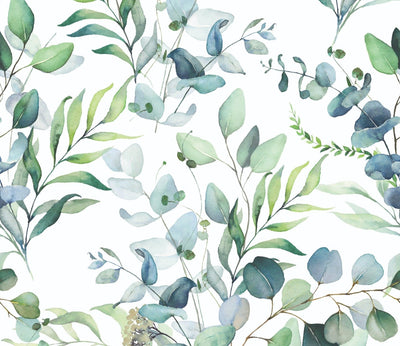
If the goal was really just a different look, recovering is the faster answer. Peeling off tired paper and applying fresh paper over a cleaned surface is an afternoon with a utility knife and a smoothing tool, with no primer, no drop cloths, no ventilation problem and no waiting for anything to cure. A neutral like Herringbone reads as texture rather than pattern on cabinet fronts, and something like Eucalyptus does the job where you want the surface to feel lighter. Both are paper sheets meant for painted, sealed and finished surfaces, so the same smooth, dry, degreased prep applies.
And if the reason you wanted to paint was function rather than color, skip the paint entirely. People search for whether they can put chalkboard paint or dry erase paint over contact paper, when a ready-made writable surface does it without the cure time. Chalkboard Classic and Dry Erase Classic are 11 by 15 inch peel and stick craft papers that write and erase with chalk and chalk markers, and with dry erase markers, respectively. Both are meant for painted and finished surfaces, which is exactly where a paint version would have been going anyway.
Frequently asked questions
Can you paint contact paper with acrylic paint?
Acrylic is the most workable choice on small pieces, and a flow or adhesion medium helps it lay down evenly. It will still sit on the surface rather than bond into it, so use a bonding primer underneath and keep it to items that are decorative rather than handled daily. Test a hidden corner first.
Can you spray paint contact paper?
You can, and thin coats help, but spray carries a specific risk: solvents in some formulas soften adhesive and can creep into seams, releasing the covering you just painted. Prime with a product rated for slick surfaces, spray in light passes rather than one wet coat, and keep spray away from any edge that is already lifting.
Can you paint over contact paper with chalkboard paint?
It is possible with a bonding primer, but you inherit every problem above plus a long cure before you can write on it. A purpose-made chalkboard surface avoids that entirely. If the covering underneath is old or lifting, take it off first rather than adding a heavy, slow-curing coating on top of a weak bond.
Can you paint over contact paper residue?
Better not to. Residue stays tacky, and paint over tack often refuses to cure properly, staying soft and collecting dust and fingerprints. Soften the adhesive with gentle heat, lift it with a citrus-based remover or rubbing alcohol, rinse, and let the surface dry completely. Then prime and paint a clean substrate instead.
Do I need to remove contact paper before painting a wall?
For a wall you plan to keep painted, yes. Removing it gives paint the drywall surface it was designed for, and you avoid seams telegraphing through your finish. One timing note in the other direction: if you have just painted and want to apply paper over it, Main Street asks you to wait at least four weeks before applying.
Featured in this article
Shop the wallpapers mentioned above.


What Is Craft Wallpaper? Craft Paper Explained, Plus 6 Projects for Leftover Sheets

Wallpaper for a Dining Room: 4 Ideas With Peel and Stick Sheets

Kids Room Wallpaper Ideas: Peel and Stick Sheets From Nursery to Tween

Fall Craft Ideas for Adults: 6 Paper Projects for a Cozy Home

What Is Peel and Stick Wallpaper? How It Works, Explained


