






Two rolls sit in different aisles of the same store. One is sold to line a drawer, the other to cover a wall, and they cost wildly different amounts. It is a fair question whether the cheap one can do the expensive one's job.
Can you use contact paper as wallpaper?
Yes, and people do it constantly. Shelf liner is self-adhesive, it comes in patterns, and it will stick to a smooth painted wall. Search dollar tree contact paper as wallpaper and you will find closets, laundry nooks and rental bathrooms covered for the price of a few coffees. The projects are real and some of them look genuinely good.
The honest version of the answer has a second half. Contact paper is engineered for a horizontal surface roughly the width of a kitchen shelf. A wall is vertical, much larger, and lit from the side. All three differences show up in the finished job, and none of them is a dealbreaker as long as you know about them before you start rather than halfway up the second drop. If you want the material explained from scratch first, our beginner's guide to contact paper covers what it is made of and what it was designed to do.
What changes the moment you turn it vertical
On a shelf, gravity is your assistant. It holds the liner flat while the adhesive settles, and anything that lifts simply lies back down under a stack of plates. On a wall, gravity switches sides. It pulls constantly at every edge, and adhesive specified for a drawer bottom now has to resist that pull in a room that heats up in the afternoon and cools overnight.
Edges are where this becomes visible. A lifted corner on a shelf hides under a cereal box. A lifted corner at eye level on a wall is the only thing anyone will look at. Doorways, light switches and the top of a baseboard are the usual first offenders, because those are the spots where the paper was trimmed and the cut edge has nothing holding it down but itself.
Temperature swings matter more than people expect. A cold garage wall, a sunny window wall, a laundry alcove that gets steamy on wash day: each asks the adhesive to expand and contract with the wall behind it. That is also why moisture-heavy rooms sit on Main Street's published avoid list, alongside textured drywall, brick or stone, and ceilings.
The seam problem nobody mentions in the before-and-after photos
Format decides everything here. Most shelf-liner rolls sold as contact paper run about 18 inches wide. Wallpaper made for walls typically comes far wider, which is the entire reason a professional job shows so few vertical lines.
Do the arithmetic on a modest wall. A four-foot-wide chimney breast at standard ceiling height needs three drops from an 18-inch roll, giving you two full-height seams running eight feet each. A twelve-foot living room wall needs eight drops and seven seams. Those seams are not hidden, either. Contact paper is not manufactured to be seam-matched the way wallpaper is, so most people who have done it plan for a slight overlap of an eighth to half an inch rather than a butt joint, and accept that the pattern will not line up perfectly across the join.
Overlapping is the pragmatic choice, and it has a consequence worth knowing: an overlapped edge is a raised edge, and raised edges catch light from the side. In a room with a lamp near the wall or a window at a shallow angle, a row of overlaps reads as faint stripes even when the pattern itself is busy. Plan your seams to fall where light hits them straight on, not where it rakes across them.
Which direction should the strips run?
Either. People who have papered a full closet this way have hung rolls both horizontally and vertically and found the result equally convincing once furniture went back in. Horizontal runs mean fewer, shorter pieces to wrestle on a short wall. Vertical runs read more like conventional wallpaper. Choose whichever gives you fewer seams for the shape of your wall.
Where a wall will fight you
- Texture. Orange peel, knockdown and popcorn finishes leave the adhesive touching only the high points, and the air pockets under the low points become lifting edges later. Main Street lists textured drywall as a surface to avoid for exactly this reason.
- Fresh paint. New paint keeps releasing solvents for weeks after it feels dry, and adhesive applied into that finds nothing stable to grip. Main Street's guidance is to wait at least four weeks after painting.
- Dust and cooking film. Wipe first. Main Street's installation guide suggests a damp cloth, or a solution of 30% isopropyl alcohol and 70% water, dried completely before you start.
- Existing wallpaper. Applying over old paper is a separate calculation, written up in our guide to covering existing wallpaper.
As for making it stick better on a wall that is fighting you, surface prep does almost all of the work, and no amount of extra pressure rescues a surface that was dusty, damp or textured to begin with.
What changes with paper made for walls
Main Street's Classic Sheets sit in an interesting spot in this argument. The product pages describe them as working "as adhesive wallpaper or decorative contact paper," and list walls, wooden furniture, cabinets, shelves and DIY projects as intended uses. Same idea as the shelf liner, then, but specified for the vertical job from the start.
Read the published specifications before you compare formats. A Classic Sheet measures 11 by 16 inches and covers 1.22 square feet, and a twelve-pack covers roughly 14.6 square feet. Material is listed as peel and stick paper wallpaper with a smooth finish, and the application surface is given as painted, sealed and finished surfaces.
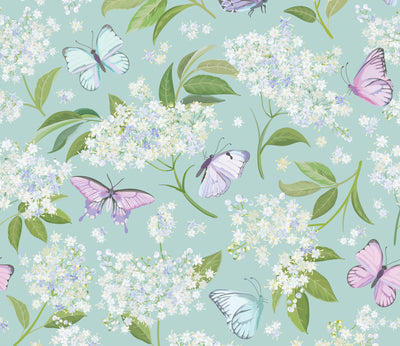
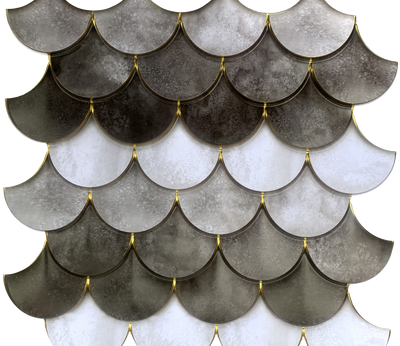
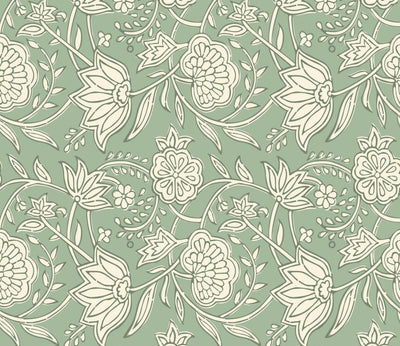
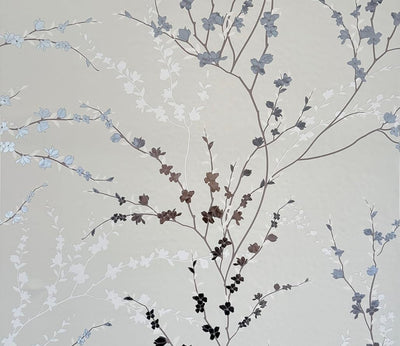
Notice what that does to the seam count. Sheets do not beat a wide roll on a large open wall. Thirty of them to cover a four-by-eight-foot panel means a visible grid, not a seamless field. What they win on is control of a defined area: the back of an alcove, a panel between two shelves, the inset of a closet door, a desk nook, a run of cabinet fronts. In those places the grid stops being a compromise and becomes the composition, which is why the Total Vibes sheets and the Peony Party sheets tend to show up in framed spaces rather than sprawling ones.
There is a material difference too. Most shelf-liner contact paper is a vinyl-type film; Main Street's sheets are paper, printed and cut in packs, which is a gentler thing to ask a painted wall to hold. A short, calm pattern like Indigo Diamonds is the most forgiving choice when you are working in a grid, because a tight repeat makes each seam far less obvious than a large-scale motif would. Eucalyptus and Herringbone behave the same way for the same reason.
A sane plan for a first wall
Pick the smallest wall you genuinely want changed, not the biggest one you can reach. Measure it and work out your coverage before buying anything. Clean the surface and let it dry. Draw a light pencil line, and level the first piece rather than trusting the ceiling line, which is almost never straight.
Then trim as you go. A sharp utility knife against a straight edge gives a cleaner result on a wall than scissors do, and Main Street's installation guide lists a utility knife and a smoothing tool among the tools worth having on hand. Bubbles are fixable while the adhesive is fresh: peel the piece back to just past the bubble and re-smooth outward instead of chasing the air sideways.
Finally, be realistic about the day you take it down. Removal depends far more on what is under the paper than on the paper itself, which we cover in is contact paper removable and in our guide to whether peel and stick damages walls.
Frequently asked questions
Can you put contact paper on walls?
You can, provided the wall is smooth, clean, dry and painted. Skip textured or popcorn finishes, brick and stone, moisture-heavy rooms, and ceilings, all of which appear on Main Street's published avoid list. Newly painted walls need at least four weeks first. Expect more seams than wallpaper, because the rolls are narrower, and test a small piece in a low-visibility corner before committing to the whole wall.
Is contact paper the same as wallpaper?
No. Both are self-adhesive coverings, but contact paper was designed for shelves, drawers and small surfaces, and usually comes as a narrow vinyl-type film about 18 inches wide. Wallpaper is made for vertical surfaces in wider widths intended to be seam-matched. Main Street's paper sheets sit between the two: sized for craft and small projects, but specified for painted, sealed and finished surfaces including walls.
How do you make contact paper stick to a wall?
Preparation does nearly all of it. Clean the wall with a damp cloth, or with a solution of 30% isopropyl alcohol and 70% water, and let it dry completely. Work on a smooth painted surface rather than a textured one, and give fresh paint four weeks to cure. Smooth from the centre outward as you go, and press the edges last so nothing is left standing proud.
How long will contact paper stay on a wall?
There is no reliable number, and anyone quoting one is guessing about your room rather than describing the material. Conditions decide it. A smooth, dry, well-prepped wall in a stable room holds far longer than a humid alcove or a wall in direct afternoon sun, and edges around cuts and switches go first. Prep quality matters more than which product you bought.
Will contact paper leave residue on a painted wall?
Sometimes, and the paint underneath is usually the deciding factor rather than the paper. Freshly painted, poorly cured or previously patched areas are the ones most likely to give trouble on removal. Test a small piece somewhere hidden, leave it a week, and take it off before you commit to a whole wall. Our removal guides work through this surface by surface.
Featured in this article
Shop the wallpapers mentioned above.


What Is Craft Wallpaper? Craft Paper Explained, Plus 6 Projects for Leftover Sheets

Wallpaper for a Dining Room: 4 Ideas With Peel and Stick Sheets

Kids Room Wallpaper Ideas: Peel and Stick Sheets From Nursery to Tween

Fall Craft Ideas for Adults: 6 Paper Projects for a Cozy Home

What Is Peel and Stick Wallpaper? How It Works, Explained


