





You signed the lease knowing the walls would be builder-beige and the answer to "Can I paint?" would be a polite no. That doesn't mean you're stuck staring at a blank box for the next twelve months. Peel and stick wallpaper is the rare upgrade that goes up without paint, nails, or a security-deposit gamble — which is exactly why renters keep asking whether it's truly apartment-safe. If you've grabbed a pack of these peel-and-stick sheets off a Dollar Tree shelf and wondered whether they're enough to actually redo a wall, here's the reassuring part: those are Main Street's sheets — and decorating a whole rental wall is a lot easier when you can pick the exact design and order as many packs as you need, instead of building a room around the one pattern that happened to be in store. The short version: peel and stick wallpaper is renter-friendly when you use it on the right walls and plan for the day you move out. Here's how to decorate a rental you don't own, and the ideas that make the most of it.
Is peel and stick wallpaper renter-friendly?
Yes — that's the whole point of it. Peel and stick wallpaper is a self-adhesive paper that presses onto a smooth wall and is designed to be removed later, so you get a designed wall without the permanence (or the contractor) that makes landlords nervous. There are no drills, no paste buckets, and nothing structural changes. You're adding a layer on top of the wall, not altering the wall itself.
The honest caveat: "removable" is not the same as "leaves zero trace on every surface, every time." How cleanly it comes down depends on your wall, your prep, and how long it's been up. Before you commit to a whole room, read our renter's guide to whether peel and stick wallpaper damages walls for the deposit-safe details — and skim your lease, since some landlords want a heads-up before any wall treatment goes up.
Start with your walls (the renter reality check)
The single biggest factor in a renter-friendly result isn't the design you pick — it's the wall you stick it to. Peel and stick paper grips best on a smooth, clean, fully cured painted surface, and the good news is that most apartments are finished in exactly that: flat or eggshell drywall in a neutral color. That's the sweet spot.
Where renters run into trouble is texture. Heavily textured or popcorn walls, glossy or unpainted surfaces, and freshly painted walls that haven't cured don't give the adhesive a flat surface to hold, so the paper can lift at the edges. If your apartment has orange-peel or knockdown texture, test a single sheet first and read how peel and stick wallpaper behaves on textured walls before you order for the whole room. Wipe the wall down, let it dry, and you've done most of the prep that matters.
Apartment decorating ideas, room by room
The trick to decorating a rental is impact without commitment: pick the wall or surface that changes how a room feels, and leave the rest alone. Here's where peel and stick earns its keep in a smaller, can't-renovate space.
A living-room accent wall
You don't need to paper four walls to transform a living room — one is plenty. The wall behind your sofa or TV is the room's natural focal point, and a single accent wall is the most renter-friendly way to use peel and stick wallpaper in a living room: high drama, minimal sheets, easy to reverse. A bold geometric like Modern Art Deco turns a flat builder wall into something that looks designed, while a softer botanical warms the space without overwhelming a small footprint.
A calmer, more personal bedroom
Renters rarely get a real headboard, so make the wall behind the bed do that job. A papered panel the width of your mattress reads like an upholstered headboard at a fraction of the effort, and it's the kind of cozy that a white rental bedroom badly needs. Reach for something restful — the soft greens of Neutral Palm, say, or a quiet floral — keep it to that one wall, and you have a focal point you can finish in a weekend.
An entryway or hallway that earns a second look
Entryways and hallways are where rentals feel the most generic, and they're also the smallest — which makes them the cheapest spot to be brave. A few sheets above a console table or running down a narrow hall give visitors a first impression that isn't "standard one-bedroom." Because the square footage is tiny, you can splurge on a pattern you love and still use only part of a pack.
A rental kitchen or bathroom refresh — without touching the lease
Rental kitchens and bathrooms are usually the hardest to live with and the most off-limits to change. This is where tile-look sheets come in: paper panels like Carrara Marble can dress up a stretch of wall to mimic a real backsplash. Keep them in the dry zones — a wall away from the stovetop and well outside the shower spray — rather than directly behind the burners or inside the tub surround. And keep wallpaper sheets out of high-moisture spots entirely; they're happiest on dry feature walls.
Furniture, shelves, and closets — the renter's secret weapon
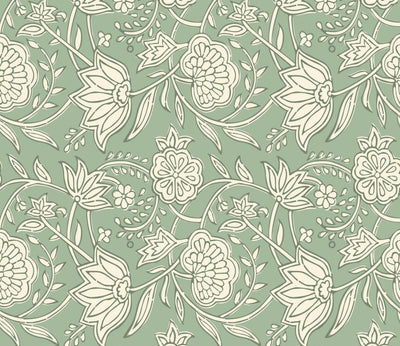
Some of the most satisfying rental projects never touch a wall at all. Peel and stick sheets can reface the front of a tired dresser, line the back of a bookcase so your shelves pop, or wallpaper the inside of a closet that only you will ever open. Block Print Floral across a drawer front or Plant Wall behind open shelving adds personality you can pack up and take with you. If your rental came with dated cabinet fronts, our renter's guide to refacing cabinets shows how far a few sheets can go.
Renter ground rules before you order
A little planning is what keeps "renter-friendly" actually friendly when it's time to hand back the keys.
- Check your lease (and your landlord). Most won't mind a removable wall treatment, but a quick message beats a surprise at move-out.
- Buy a test pack first. Stick one sheet, leave it a few days, and see how your specific wall holds it before you order for a whole room.
- Measure before you buy. Each sheet covers about 1.22 square feet (a 12-pack runs roughly 14.6 square feet), so map your wall first with our measuring guide.
- Keep a smoothing tool and a sharp blade handy. A plastic smoother presses out bubbles and a utility knife trims clean edges at the baseboards and outlets.
- Respect the surface rules. Smooth painted walls and sealed wood are friends; popcorn ceilings, brick, and wet zones are not.
None of this requires the steady hand of a classically trained painter — though founder Jan McCallum's artist's eye is the reason these patterns feel considered rather than mass-produced. You're matching a design to a wall and pressing it on. That's the whole craft.
Frequently asked questions
Is peel and stick wallpaper renter-friendly?
Yes. It installs without paint, nails, or a contractor and is designed to be removed when you move out, which makes it one of the most rental-safe ways to decorate. The key is using it on smooth, painted walls and planning for clean removal. Check your lease first, and see our renter's damage guide for the deposit-safe details.
Are the sheets at Dollar Tree the same ones, and are they enough to do a rental wall?
They're the same sheets — the peel-and-stick wallpaper sold at Dollar Tree is Main Street's. The catch for a renter is supply: a wall takes several coordinated packs, and a store shelf only carries a pattern or two at a time. Ordering direct lets you choose the design that actually suits your apartment and buy enough of it to finish the wall, rather than planning a room around whatever's in stock that day.
Will peel and stick wallpaper damage apartment walls?
On a smooth, fully cured painted wall it's generally designed to come off cleanly, but results vary with the surface, the prep, and how long it's been up. Walls painted very recently or finished in cheap flat paint are more likely to mark. Our renter's guide to wall damage covers how to remove it gently.
Do I need my landlord's permission for removable wallpaper?
It depends on your lease. Many leases only restrict permanent changes like paint or nail holes, and a removable wall treatment usually falls outside that. Still, a quick message to your landlord or property manager before you start is the safest move — it avoids any disagreement about your deposit later.
Does peel and stick wallpaper work on textured apartment walls?
It works best on smooth walls. Light texture can sometimes work, but heavy orange-peel or popcorn texture keeps the adhesive from making full contact, so edges may lift over time. If your rental has textured walls, test one sheet in an inconspicuous spot first, or focus on smoother surfaces like furniture, doors, and shelf backing.
What rooms work best for peel and stick wallpaper in a rental?
Dry, smooth-walled spaces are ideal: living-room and bedroom accent walls, entryways, and hallways. Tile-look panels can refresh a kitchen or bath wall in the dry zones away from direct water and heat. Keep wallpaper sheets out of high-moisture areas, and you'll get the most renter-friendly result in any room.
Featured in this article
Shop the wallpapers mentioned above.

Eucalyptus Peel & Stick Wallpaper Sheets – 12 Pack
$30.00
Indigo Diamonds Peel & Stick Wallpaper Sheets – 12 Pack
$30.00
Peony Party Peel & Stick Wallpaper Sheets – 12 Pack
$30.00
Floral Sprinkles Peel & Stick Wallpaper Sheets – 12 Pack
$30.00
Blue Painted Stone Mosaic Peel and Stick Wallpaper Tiles - 24 Pack
$40.00
Does Shelf Liner Attract Bugs? What Really Draws Pests to Your Shelves

How to Make a Stencil With Contact Paper for Crisp Painted Lines

Chalkboard Paint vs Chalkboard Wallpaper: Which Writable Wall Should You Choose?

How to Do Corners With Contact Paper: Inside, Outside and Rounded Corners

How to Cover a Desk With Contact Paper (and a Table Too)


