





Press a sheet onto a laminate drawer front and it will still be flat a year later. Press the same sheet onto the raw plywood shelf above it and a corner can lift before the weekend is out. So the question does contact paper stick to wood really contains four questions, because "wood" covers at least four surfaces and only some of them treat an adhesive kindly. Here is what holds, what needs preparation first, and what will keep refusing no matter how patiently you smooth it down.
What actually decides whether it sticks
A self-adhesive sheet holds by contact, which sounds obvious until you look closely. The glue has to flow into the microscopic dips of a surface and stay in touch with them. Two properties decide whether that happens, and once you know both, you can predict most surfaces yourself.
Porosity is the first. On a sealed, closed surface the adhesive sits on top of the finish as one continuous layer. On an open, absorbent or dusty surface it does something less useful: it either sinks into the fibres or bonds to a layer of loose particles instead of the thing underneath. A perfect bond to dust is still a failure.
Surface energy is the second, and it is the one that catches people out. An adhesive needs a surface whose energy is high enough for the glue to spread out and make full contact, a property the adhesives industry calls wetting out. Slippery polyolefin plastics such as polypropylene and polyethylene sit below that threshold, which is why a sheet can look perfectly applied and still lift at every edge within days. Nothing was done wrong. The surface simply never let the glue settle.
Main Street publishes its own version of this rule. The How to Use guide lists the best surfaces as smooth tile, sealed wood, and painted drywall that is clean, flat and dry, and the surfaces to avoid as textured or popcorn drywall, brick or stone walls, and areas exposed to moisture. The product pages compress it into three words under Application Surface: painted, sealed, and finished.
Does contact paper stick to wood? Finish by finish
Four answers, one for each way wood arrives in your house:
- Sealed or varnished wood: yes, and this is the best case in the whole guide. The finish is doing the work, giving the adhesive a closed surface to sit on.
- Laminate and melamine: yes. Factory finishes are smooth and non-porous by design, which is convenient, since most flat-pack furniture is made of them.
- Painted wood: yes, provided the paint is sound and fully cured. Main Street asks for at least four weeks after the final coat, and a dresser gets no shorter a wait than a wall does. Chalky, flaking or freshly rolled paint is a different story, because the adhesive can end up holding the paint more firmly than the paint holds the wood.
- Raw or unsealed wood: it grips, and that is the problem rather than the promise. Open grain lets the adhesive key physically into the fibres.
Where those four really diverge is the day you take the paper off, and that is the subject of our guide to whether contact paper is removable. Everything below is the sticking-down side of the question, on the surfaces that guide does not cover.
Plywood, MDF and particle board
Engineered boards are the most common disappointment, and they fail for a reason that has nothing to do with the paper. Raw plywood has a sanded face veneer that is still open grain, so the adhesive soaks in unevenly and the grain telegraphs through as a faint stripe. Bare particle board and cut MDF edges are worse: they are compressed chips and fibres with a fine, chalky dust that renews itself every time you touch them. Wipe the board, wait a minute, and there is dust again.
The general fix, and this is standard craft and woodworking practice rather than anything Main Street tests or publishes, is to stop asking the paper to solve a substrate problem. Sand the face smooth, vacuum and wipe the dust away completely, then seal or prime the board and let that coat cure before anything sticky goes near it. A sealed board is no longer particle board as far as the adhesive is concerned. It is a painted, finished surface, which is exactly the category the brand does publish guidance for.
One engineered board needs no help at all: factory-laminated MDF, the white melamine-faced shelving sold in every hardware shop. That is a laminate surface wearing an MDF core, and it behaves like laminate.
Metal, plastic and glass
Metal is friendlier than most people expect. A filing cabinet, a locker door or a painted metal panel is smooth and non-porous, which is everything an adhesive wants. Two things undo it. The first is invisible oil, from manufacturing or from hands, so a wipe with an isopropyl alcohol solution matters more here than on wood. The second is condensation: metal changes temperature faster than the air around it, so it sweats, and a damp surface will loosen an edge that looked permanent in a dry week.
Plastic is the real coin toss, and the answer depends on which plastic you are holding. Rigid, higher-energy plastics such as acrylic, ABS and polystyrene generally take an adhesive well. The waxy, flexible plastics that most storage bins are made from are the low surface energy problem described above, and no amount of pressure fixes chemistry. A quick field test: if the surface feels faintly slippery and dry, like a milk bottle rather than a CD case, expect edge lift.
Glass is the easiest surface here. It is smooth, non-porous and simple to degrease, which is why so many window film and privacy projects are contact paper projects. The exception is glass that regularly runs with condensation, which is a moisture question rather than an adhesion one.
Cardboard, concrete and cinder block
Cardboard works well, which is why covering books and lining storage boxes are such reliable projects. Just plan for it to be permanent: the adhesive keys into paper fibres and takes the top layer with it when it comes off, so a covered box is covered for life.
Concrete, cinder block and brick are where the answer turns into a straight no. All three are porous, all three shed dust, and cinder block adds efflorescence, the powdery salt bloom that surfaces as moisture evaporates through masonry. It sits between the adhesive and the wall like loose grit, and a bond to loose grit is not a bond. Then there is geometry: mortar joints and block texture mean the sheet is only touching the high points. Main Street lists brick and stone on its avoid list for exactly these reasons, and rough or textured walls fail in the same way, which we cover in detail in peel and stick wallpaper on textured walls.
Where Main Street's papers sit on this list
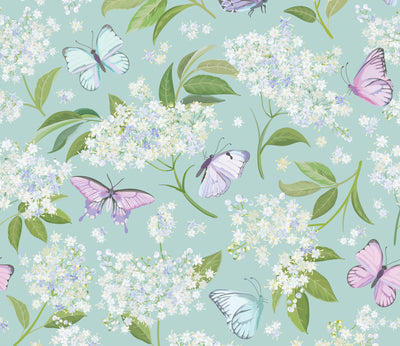
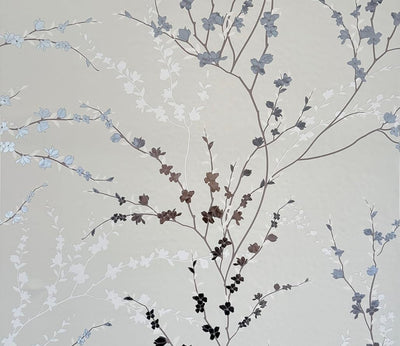
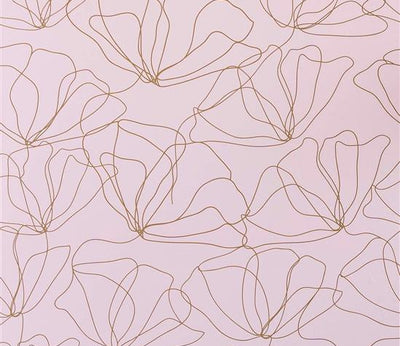
Main Street sheets are paper, not film, and the product pages say plainly that they work as adhesive wallpaper or decorative contact paper. Herringbone carries that line alongside the spec that governs everything on this page: Application Surface, painted, sealed and finished. Read against the surfaces above, that puts the range in the easy column: painted drywall, sealed wood, smooth tile, and the finished fronts of furniture you already own.
It also draws the boundary. These paper sheets are neither waterproof nor water resistant, and the product pages ask you to skip moisture and wet zones, so a papered bathroom vanity is working against the material rather than with it. The beginner's guide to contact paper takes that question further.
The functional craft papers follow the same rule. Chalkboard Classic and Dry Erase Classic are both listed as best applied to painted and finished surfaces, which makes the painted back panel of a shelf or cubby unit close to an ideal home for them. A repeat like Indigo Diamonds does the same job on laminate drawer fronts. And when a surface is not on the published list at all, a small square somewhere nobody looks will tell you more in two days than any guide can. Our notes on applying contact paper without bubbles cover the prep that makes the difference.
Frequently asked questions
Does contact paper stick to wood?
Yes, on sealed, varnished, laminated or fully cured painted wood, which are all closed surfaces the adhesive can sit on top of. Raw and unsealed wood is the exception. It will hold, but the glue keys into the open grain, so removal tends to bring wood fibres with it. Sealing or priming raw wood first changes the outcome considerably.
Will contact paper stick to particle board?
Not reliably in its bare state. Cut particle board and exposed MDF constantly shed a fine dust, so the adhesive bonds to loose particles rather than to the board, and lifts soon after. Sanding, removing every trace of dust and then sealing or priming the surface turns it into the painted, finished surface that adhesives are designed for.
Does contact paper stick to plastic?
It depends entirely on the plastic. Rigid types such as acrylic, ABS and polystyrene usually hold well. Flexible, waxy-feeling storage bins are typically polypropylene or polyethylene, which have surface energy too low for adhesives to spread across properly, so edges lift within days. Test an offcut on the underside before committing to the project.
Will contact paper stick to cement or cinder block walls?
No, not directly. Masonry is porous, sheds dust and often carries efflorescence, a powdery salt deposit left as moisture evaporates through the wall. The adhesive grips that loose layer instead of the block. Mortar joints and surface texture also mean the sheet contacts only the high spots. Main Street lists brick and stone among surfaces to avoid.
Does contact paper stick to metal?
Usually yes. Metal is smooth and non-porous, which suits an adhesive well, so filing cabinets and painted metal panels are popular projects. Clean thoroughly first, since even invisible oil from handling will prevent a bond. Watch for condensation, because metal cools faster than the surrounding air and a damp surface will release an edge.
Featured in this article
Shop the wallpapers mentioned above.


What Does Contact Paper Stick To? A Surface-by-Surface Guide

Contact Paper on Countertops: How to Do It and What to Expect

Faux Texture Wallpaper: Does Wood, Stone or Grasscloth Look Real?

Can You Paint Over Contact Paper or Peel and Stick Wallpaper?

Peel and Stick Wallpaper Borders: Cut Your Own From Sheets


