






The living room is the wall everyone actually sees — the backdrop to movie nights, slow coffees, and every guest who walks through the door. So when it feels a little flat, you don't necessarily need a renovation. Peel and stick wallpaper for the living room lets you turn one bare wall into the reason people say "oh, I love this room" — no drills, no contractors, no compromises. If you grabbed one of these peel-and-stick sheets from a Dollar Tree bin and realized one sheet won't cover a whole accent wall, this is where the rest lives — the very same sheets, but with the full design range and the stock to actually finish the wall.
Below you'll find where to put it, how to choose a pattern that flatters the space, how much you'll need, and how to put it up so it looks like you hired someone (you didn't).
Why peel and stick wallpaper works in the living room
Living rooms are the natural home for self-adhesive wallpaper. The walls are usually smooth, painted, and dry — exactly the kind of finished surface this paper is made for — and there's no shower steam or stovetop grease to fight, the way there is in a bathroom or kitchen. That means you get the look of a designer feature wall with a fraction of the mess and none of the long-term commitment.
It's also forgiving of the way living rooms actually work. Rearranging the sofa next spring? Moving out next year? Because the paper is designed to be removable, a living room accent wall can be a seasonal mood rather than a decade-long decision. Founder Jan McCallum trained as an oil painter, and that eye for color and composition runs through the collections — so the patterns are built to anchor a room, not just fill it.
Living room accent wall ideas to steal
You almost never want to paper all four walls of a living room — one well-chosen wall does the heavy lifting and keeps the space feeling open. Here's where a feature wall earns its keep:
- Behind the sofa. The most-photographed wall in the house. A pattern here frames the seating like art and instantly gives the room a focal point.
- The fireplace or chimney breast. Papering the chimney breast draws the eye up and makes the fireplace feel intentional. A soft stone or marble look, like Carrara Marble, reads as elevated without shouting.
- The media wall. Wallpaper behind the TV breaks up that big black rectangle and stops the screen from being the only thing you notice.
- Alcoves and built-ins. Lining the back of a bookcase or a recessed nook adds depth and makes shelving look styled rather than stacked.
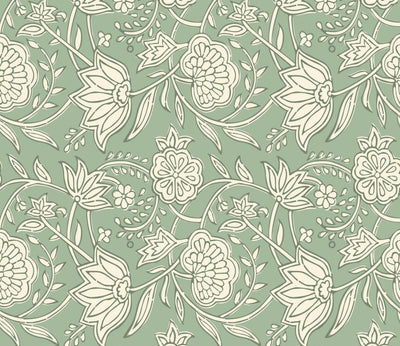
- A reading corner. A single papered wall behind a chair turns an unused corner into a deliberate little retreat — the look in the photo above, where sage Block Print Floral sets off a lounge chair and console.
Want the full tour of which rooms suit which approach? Our guide to peel and stick wallpaper ideas for every room walks through the whole house, and the bedroom accent wall ideas translate beautifully to a living room too.
Choosing a living room pattern that actually fits
The right pattern depends on the room more than the trend. Three things to weigh:
Scale
Big, open living rooms can carry a large, bold repeat without feeling busy. Smaller or darker rooms tend to breathe better with a tighter, subtler pattern. A textured neutral like Woven Stripe adds warmth and movement while still reading as calm — perfect when you want interest without the wall stealing the show.
Color and light
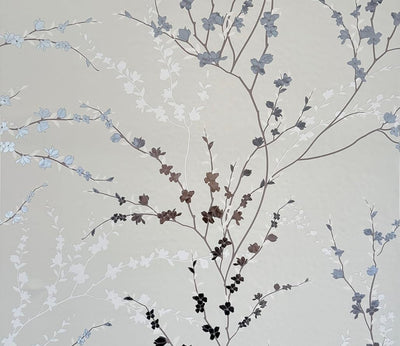
Match the wall to the mood you want. Cool greens and blues quiet a busy room; warm creams and golds make a north-facing space feel cozier. A botanical such as Magnolia Branches softens a modern room, while a classic Toile Forest leans traditional and storybook. Pull one color from the paper into your cushions or throw, and the whole room looks pulled together on purpose.
Your furniture
Let the wall complement what's already in the room. Pattern looks best with a few quiet pieces in front of it, not competing against an equally loud sofa. When in doubt, order a single pack first and live with a sheet taped to the wall for a day or two before you commit to the whole thing.
How much wallpaper will you need?
Measure before you buy — it saves a second order and a week of waiting. Each sheet is 11 by 16 inches and covers about 1.22 square feet, and a 12-sheet pack covers roughly 14.6 square feet. To estimate a feature wall, multiply its width by its height in feet to get the square footage, then divide by the coverage per pack and round up so you've got a little extra for trimming and pattern matching.
Because pack sizes and coverage can vary by design, always confirm the numbers on the product page before you check out. For a step-by-step version with a worked example, see our measuring guide.
Putting it up — no drills, no contractors
Application is genuinely beginner-friendly, but a little prep makes the difference between "did a pro do this?" and "why is that corner lifting?"
- Start with a clean, smooth wall. Wipe away dust and let it dry fully. This paper grips best on smooth, painted, finished walls. Heavily textured or popcorn surfaces, brick, and stone aren't ideal — the paper struggles to make full contact, so smooth the wall first or choose a different spot.
- Keep two tools handy. A smoothing tool (or a clean, flat edge) to press out bubbles as you go, and a sharp utility knife to trim edges and outlets cleanly. It's a low-tool job, not a no-tool one.
- Work top to bottom, slowly. Peel a little backing at a time, line up your pattern, and smooth from the center outward. Going slow is how you avoid trapped air.
For the full walkthrough — including corners and outlets — our guide on how to apply peel and stick wallpaper like a pro covers every step.
Renter-friendly by design
This is where a living room feature wall really shines for renters. Because the paper is made to come back off, you can give a rental personality without risking your deposit — far less drastic than paint, and reversible when the lease ends. That said, walls and paint finishes vary, so test removal on a small, hidden area first and check the product page for the manufacturer's guidance before you cover a whole wall. Our renter's guide to wall damage goes deeper on doing it safely.
Style the wall — don't stop at the paper
A feature wall does its best work when the rest of the room nods back to it. Once the paper is up, a few small moves make it look designed rather than added:
- Echo one color. Pull a single shade from the pattern into a cushion, a throw, or a vase. Repetition is what makes a room feel intentional.
- Layer in lighting. A wall sconce or a floor lamp angled across the wall catches the texture and keeps the pattern from going flat after dark.
- Hang art with confidence. A busy pattern can carry simple, graphic art; a subtle one welcomes a bolder gallery arrangement. Either way, leave a little breathing room so the wall and the art aren't fighting.
- Mind the frame. Where the papered wall meets trim, a window, or the ceiling, a clean trimmed edge is what sells the whole illusion — take your time on those seams.
Think of the wallpaper as the first chord, not the whole song. The cushions, lamp, and art are what turn one decorated wall into a living room that feels finished.
Frequently asked questions
Is peel and stick wallpaper good for living rooms?
Yes — living rooms are one of the best rooms for it. The walls are typically smooth, painted, and dry, which is exactly the finished surface this self-adhesive paper is designed for. Without the steam of a bathroom or the heat of a kitchen, a living room accent wall tends to go up easily and look polished.
How do I choose a wallpaper pattern for my living room?
Start with the room's size and light. Larger rooms can handle bold, large-scale repeats; smaller or darker rooms feel calmer with subtle, textured neutrals. Pick a color that complements your sofa rather than competing with it, and order one pack to test against the wall before committing to the full project.
Can I put peel and stick wallpaper on a textured living room wall?
It's not the ideal surface. This paper grips best on smooth, finished walls, and texture or popcorn can keep it from making full contact, which leads to lifting. If your living room wall is textured, smooth or skim-coat it first, or focus on a smoother section like a built-in or alcove.
Will it damage my walls when I take it down?
It's designed to be removable, which is why it's popular with renters, but results depend on your wall and paint. Remove it slowly and at a low angle, and always test a small, hidden patch first. Check the product page for the manufacturer's removal guidance so you know what to expect.
I found these sheets at Dollar Tree — can I get enough to cover a living room wall?
You can. These are the same peel-and-stick sheets sold at Dollar Tree, but a store bin only carries whatever happened to land there that week — rarely enough of one design to cover an accent wall. Here the full pattern range is in stock, so you can measure your wall, order the number of packs it actually needs, and know the design won't sell out halfway through the project.
Featured in this article
Shop the wallpapers mentioned above.

Block Print Floral Peel & Stick Wallpaper Sheets – 12 Pack
$17.85
Toile Forest Peel & Stick Wallpaper Sheets – 12 Pack
$17.85
Woven Stripe Peel & Stick Wallpaper Sheets – 12 Pack
$17.85
Carrara Marble Peel & Stick Wallpaper Sheets – 12 Pack
$17.85
Magnolia Branches Peel & Stick Wallpaper Sheets – 12 Pack
$17.85
Lining Kitchen Shelves: The Order of Operations

How to Choose Shelf Liner: Five Questions That Decide It

Cabinet Liner: How to Line the Inside of Kitchen Cabinets

Non-Toxic Shelf Liner: What the Label Actually Tells You

Decorative Drawer Liners: Pattern Scale in a Small Box


