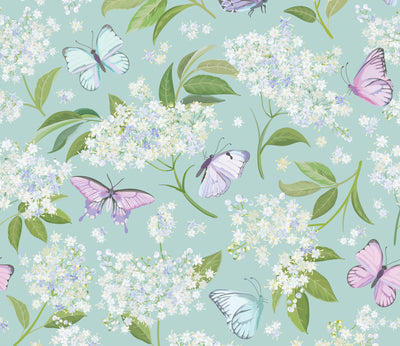
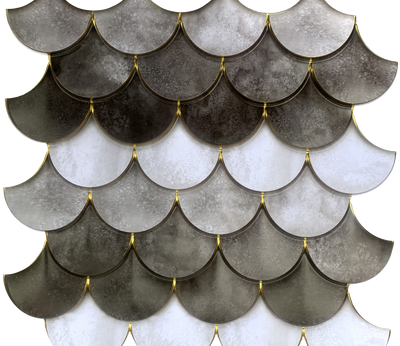


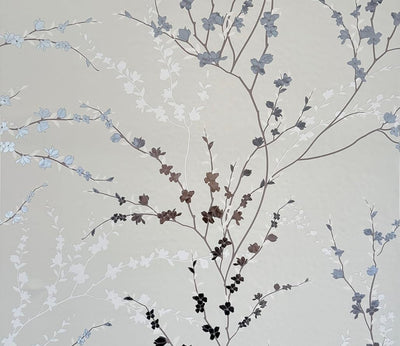

Open shelving backed with Carrara marble peel and stick wallpaper, styled with books, candles and decor — a dry-zone kitchen accent idea.
MS Creations

Peel and Stick Kitchen Wallpaper: Ideas That Actually Work

Main Street7 MIN READ

Your kitchen does more living than almost any room in the house, and yet its walls are often the last thing anyone thinks to refresh. Peel and stick kitchen wallpaper is the quiet fix for that: a self-adhesive paper you press onto a smooth, dry wall to add color, pattern, or a soft marble look — no drills, no contractors, no repainting weekend. The one thing worth getting right is where it belongs in a kitchen (and, just as importantly, where it doesn’t). Let’s walk through it.

Can you use peel and stick wallpaper in a kitchen?

Yes — with one honest caveat. Peel and stick wallpaper is a decorative paper, and it’s happiest on dry, low-splash surfaces. Kitchens have plenty of those: the wall behind a breakfast table, the panel above your cabinets, the back of open shelving, a pantry, or a little coffee-and-mug nook. What it isn’t built for is the wet, hot working triangle — directly behind the sink or the stove — where steam, splatter, and heat are constant.

Main Street’s own application guide lists smooth painted drywall, sealed wood, and smooth tile as the best surfaces, and specifically flags moisture-prone zones as ones to avoid. So picture your kitchen as a map: the calm, dry areas are fair game, and the splash zone gets a different solution (more on that below).

Why peel and stick is a smart kitchen refresh

Kitchens are expensive to renovate and awkward to repaint — you’re working around appliances, cabinets, and a room the whole household needs every day. That’s exactly why a removable, self-adhesive paper is such a satisfying middle ground. It goes up in an afternoon, it costs a fraction of a remodel, and it asks nothing permanent of your walls. For renters, that last part is the whole game: you get a kitchen that finally feels like yours, and it’s designed to come back off when you leave. No landlord conversation required.

It’s also low-stakes creatively. Because you’re usually decorating one wall or one zone rather than the entire room, you can be a little braver with pattern than you would be with paint or a full remodel. If you tire of it, you swap it — not the cabinets.

The best kitchen zones for peel and stick wallpaper

Once you stop picturing “wallpaper” as an all-four-walls commitment, a kitchen opens up. Here are the spots that reward it most.

A breakfast nook or dining wall

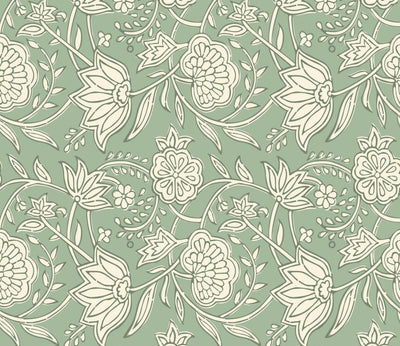
The wall behind a small kitchen table is a natural accent zone — well away from the sink, easy to reach, and begging for a little personality. A soft botanical like Eucalyptus or a hand-drawn Block Print Floral gives a nook that “designed on purpose” feeling without touching the rest of the room.

The back of open shelving

Open shelves look ten times more intentional with a lined back panel. A cool Carrara Marble sheet behind your everyday dishes reads like a custom built-in — and because the sheets are easy to cut to size, you can fit each shelf exactly. It’s a five-minute upgrade that makes glassware and ceramics pop.

Above the cabinets and on the soffit

That often-ignored space between your upper cabinets and the ceiling is low-traffic and dry — ideal for a subtle pattern that draws the eye up and makes the room feel taller. A textural neutral like Herringbone adds warmth up there without shouting for attention.

The pantry, cabinet interiors, and a coffee bar

These are the delightfully sneaky wins. Line the inside of a cabinet or the back of the pantry, or frame a coffee station on a dry stretch of wall. They’re small, forgiving projects — perfect for test-driving a pattern you love before you commit to a bigger wall. Open a cabinet to a hit of color and the whole morning feels a little more deliberate.

What about the kitchen backsplash?

This is where honesty matters. The classic backsplash — the strip directly behind the stove and sink — sees water, grease, and heat all day, which is more than a decorative paper sheet is meant to take. For that zone, reach for Main Street’s tile-look White Subway Wallpaper Tiles instead. They’re made with a glossy, tile-inspired finish and are marketed for kitchen and bathroom walls, so they suit a decorative backsplash better than a paper sheet does.

Even then, keep any peel and stick product away from direct water and the open heat of a stovetop, and check the individual product page for its recommended use. If you want a full walkthrough of that look, our guide to affordable peel and stick backsplash tiles covers it start to finish.

Choosing a pattern that fits your kitchen

Kitchens already carry a lot of visual noise — cabinets, hardware, appliances, stacked dishes — so the wallpaper’s job is usually to add calm or one deliberate hit of character, not to add clutter. A few directions that tend to work:

  • Marble and stone looks feel fresh and bright, and pair with almost any cabinet color. Carrara Marble is the easy default.
  • Botanicals and florals warm up a breakfast nook or a plain white kitchen — try Eucalyptus or Block Print Floral.
  • Tile looks give you ceramic geometry without the grout lines — White Subway Wallpaper Tiles are a clean, timeless pick for a dry accent wall.
  • Quiet textures like Herringbone read as sophisticated neutrals that won’t compete with a busy countertop.

Founder Jan McCallum trained as an oil painter, and that eye for pattern and color runs through the collections — so whatever you choose is designed to look considered rather than clip-art. If you’re still deciding, our room-by-room ideas guide is a good place to browse for inspiration.

How to put up kitchen wallpaper (the quick version)

Peel and stick is genuinely beginner-friendly, but “peel and stick” doesn’t mean “no prep.” Here’s the honest short version.

  1. Start with the right surface. Smooth painted drywall, sealed wood, or smooth tile hold best. Textured or popcorn walls, brick, and stone aren’t recommended.
  2. Clean and dry the wall. Wipe it down with a damp cloth and let it dry completely — dust and cooking grease (a very real thing in kitchens) keep the adhesive from gripping.
  3. Measure and cut. Main Street’s sheets are 11 x 16 inches, roughly 1.22 square feet each, so a 12-pack covers about 14.6 square feet. Keep a measuring tape, a pencil, a sharp utility knife, and a smoothing tool on hand.
  4. Peel, press, and smooth. Work from the top down, pressing out bubbles as you go with the smoothing tool, then trim the edges clean.

Want the full step-by-step? See our guides on applying peel and stick wallpaper like a pro and measuring your project so you buy the right amount the first time.

Renter-friendly, by design

One of the best things about refreshing a kitchen this way: it’s meant to come back off. On smooth, sealed, painted surfaces, peel and stick sheets are designed to remove cleanly when you’re ready for a change or a move — no repainting the whole kitchen, no security-deposit anxiety. As always, test a small, hidden corner first to see how your specific wall responds, especially in an older rental where the paint may be more delicate. It’s the low-commitment way to make a kitchen feel unmistakably like yours.

Frequently asked questions

Is peel and stick wallpaper good for a kitchen?

It’s a great fit for the dry, low-splash parts of a kitchen — accent walls, dining nooks, the back of open shelving, above the cabinets, and pantries. It’s a decorative paper, so it isn’t designed for the wet, hot zones directly behind the sink or stove. Keep it to the calmer surfaces and it earns its place beautifully.

Can you put peel and stick wallpaper behind the stove or near the sink?

That’s the one spot to skip. The area directly behind a stove or sink deals with heat, steam, and constant splashing, which is more than a paper sheet is built to handle. For a true backsplash, use a wipeable tile-look product instead, and always check the product page for its recommended use before you install anything.

What kind of wallpaper is best for kitchen walls?

For most kitchens, a smooth self-adhesive paper in a calm pattern — marble, a soft botanical, a tile look, or a quiet texture — works beautifully on a dry accent wall. Choose something that complements your cabinets rather than competing with them, and buy all the sheets you need in one order so the color stays consistent across the project.

How do you remove peel and stick wallpaper from a kitchen wall?

Lift a corner slowly and pull at a low angle, taking your time so it comes away in one piece. On smooth, sealed, painted walls it’s designed to release cleanly. If a little residue lingers, a warm damp cloth usually takes care of it. When in doubt, test an out-of-the-way spot first so you know how your particular wall will respond.

MAIN STREET

Featured in this article

Shop the wallpapers mentioned above.

Learn & Inspire

A coral and blush chevron peel and stick wallpaper accent wall behind a white headboard, styled with pillows and a framed photo in a bright bedroom.
Posted By Main Street

Is Peel and Stick Wallpaper Good? An Honest Look at the Pros and Cons

You have seen the before-and-afters: a rented bedroom wall taken from beige to bold in an afternoon, a tired dresser reborn under a wrap of pattern. Then the doubt creeps in. Is peel and stick wallpaper actually good, or does it look great in the photo and disappointing on the wall? The honest answer is that it depends entirely on what you ask it to do. Matched to the right project, it is genuinely good. Matched to the wrong one, it will let you down. So, is peel and stick wallpaper good? The short answer Yes — for the jobs it was designed for. Peel and stick wallpaper is a paper-based, self-adhesive product meant for accent walls, furniture makeovers, shelf backing, and low-commitment refreshes on smooth, clean, well-prepped surfaces. Think of it as a decorating tool with a clear lane, not a miracle finish that works everywhere. Main Street founder Jan McCallum trained as an oil painter, and that eye for pattern and color shows in a print that reads as intentional rather than gimmicky. Treat the material like what it is, and the results hold up beautifully. Ask it to behave like permanent, hung-by-a-pro wallpaper on a textured wall in a steamy bathroom, and it will disappoint you. So the real question is not whether it is good in the abstract, but whether it is good for your project. Here is where it shines, where it struggles, and how to tell which side of that line you are on. What peel and stick wallpaper does well When people fall in love with removable wallpaper, this is usually why. It is renter-friendly by design. These sheets are made to be temporary, so you can decorate a lease without the permanence (or the security-deposit anxiety) of paint or traditional paper. Removability is never a guarantee on every wall — always test a small, hidden patch first — but low commitment is the whole point. For the full renter breakdown, see our guide on whether peel and stick wallpaper damages your walls. No drills, no contractors. You do not need a paste table, a professional, or a free weekend of muscle. A measuring tape, a smoothing tool, and a little patience get most small projects done. The design range is real. This is where it earns its keep. You can go soft and botanical with Eucalyptus, graphic and glam with Indigo Diamonds, or bold and warm with a statement print like Total Vibes — looks that would cost far more in hung wallpaper. It works beyond walls. Some of the most satisfying projects are not walls at all. Drawer fronts, cabinet panels, shelf backing, and stair risers all take pattern well — a wood-look sheet like Herringbone can make a flat-pack dresser look custom. Our furniture wallpapering guide walks through it. It is low-cost and low-stakes. A small accent wall or a furniture flip is an inexpensive way to test a bold color or pattern you would never commit to with paint. If you tire of it, you have not repainted a room. Where peel and stick wallpaper falls short An honest verdict needs the other column too. Most disappointment traces back to one of these. It is picky about surfaces This is the big one. Peel and stick wallpaper is at its best on smooth, sealed, dry surfaces — painted drywall, sealed wood, and smooth tile. It struggles on textured or popcorn walls, brick, and stone, where the adhesive cannot get full contact and you may see peeling or bubbling over time. Ceilings are on the not-recommended list too. If your walls have a heavy orange-peel or knockdown texture, that is a sign to rethink the surface before you buy. It is not truly "no tools, no effort" The marketing shorthand oversells the ease a little. You will still want a utility knife for clean edges, a smoothing tool to press out bubbles, and some patience for lining up seams and matching a pattern across sheets. It is very doable for a first-timer, but it rewards care. Our step-by-step application guide covers the technique that separates a crisp result from a wrinkled one. Keep the sheets out of wet zones Paper sheets and steam do not mix. Main Street's own guidance is to avoid areas exposed to moisture — showers, tub surrounds, and other wet zones — where humidity can shorten how long the paper lasts. Some prints are listed as water-resistant, but that is not the same as waterproof, so check the individual product page and keep sheets to dry rooms. Quality varies — and so does your prep Not all removable wallpaper is created equal, and results depend as much on your surface as on the paper. Buy all the sheets for a project in one order so the color matches, clean the wall first, and give fresh paint time to cure. Skip those steps and even a good product can look off. Is it worth it? Who should (and shouldn't) use it Weigh it against what you actually need from a wall. It is worth it if you are a renter who wants real design without losing a deposit, a homeowner who likes to change things seasonally, or anyone drawn to a quick accent wall, a furniture refresh, or a small, dry room refresh on a budget. A floral like Peony Party behind a bed or a geometric on a cabinet delivers a lot of impact for the effort and cost. It may not be worth it if you are covering a heavily textured whole room, decorating a high-moisture bathroom with sheets, or hoping for a single permanent finish you will never touch again. In those cases, weigh your options with our comparison of peel and stick versus traditional wallpaper. How to make sure yours looks good Most of the difference between "wow" and "meh" comes down to a few habits: Start with a smooth, clean, dry surface. Wipe away dust, and if you have recently painted, let the wall fully cure before applying. Measure and buy enough at once. Slight color variation can happen between print batches, so order your whole project together. Test a small patch first, especially in a rental, so you know how the paper behaves on your specific wall before you commit to the full run. Use a smoothing tool and take your time with seams and corners. Peel a few inches, press, and work slowly — rushing is where bubbles come from. Do that, and the answer to "is peel and stick wallpaper good" becomes an easy yes for the space you had in mind. Frequently asked questions Is peel and stick wallpaper good quality? For its category, yes — quality is genuinely good when you match the paper to the right surface and prep well. These are printed paper sheets meant for smooth, dry surfaces like painted drywall, sealed wood, or smooth tile. On those, the print reads crisp and intentional. Quality complaints usually come from applying it to textured or damp walls, where no removable paper performs at its best. Does peel and stick wallpaper look cheap? It does not have to. On a smooth, well-prepped wall with the seams lined up and bubbles smoothed out, a good print looks polished and custom. What reads as "cheap" is almost always installation, not the paper: lifting corners, mismatched patterns, or trapped air. Slow, careful application on the right surface is what makes it look expensive. Is peel and stick wallpaper good for bathrooms? Paper wallpaper sheets are not recommended for wet bathroom zones. Main Street advises keeping sheets away from showers, tub surrounds, and other high-moisture areas, since steam can cause lifting over time. If you want pattern in a bathroom, keep sheets to a dry accent wall well away from water, or consider tile-look options for splash-prone spots and check each product page for its surface guidance. Is peel and stick wallpaper worth the money? For accent walls, furniture makeovers, shelf backing, and renter-friendly refreshes, it is usually well worth it — you get a big visual change for a small cost and no permanent commitment. It is less worth it as a substitute for permanent, hung wallpaper across a whole textured or high-moisture room. Decide by the project, not the product. Will peel and stick wallpaper damage my walls? It is designed to be removable and renter-friendly, so it is a low-risk choice for most smooth, painted walls. That said, no removable paper can promise zero residue on every surface, and freshly painted or delicate finishes are more sensitive. Always test a small, hidden area first and remove slowly to give yourself the best result.
Open shelving backed with Carrara marble peel and stick wallpaper, styled with books, candles and decor — a dry-zone kitchen accent idea.
Posted By Main Street

Peel and Stick Kitchen Wallpaper: Ideas That Actually Work

Your kitchen does more living than almost any room in the house, and yet its walls are often the last thing anyone thinks to refresh. Peel and stick kitchen wallpaper is the quiet fix for that: a self-adhesive paper you press onto a smooth, dry wall to add color, pattern, or a soft marble look — no drills, no contractors, no repainting weekend. The one thing worth getting right is where it belongs in a kitchen (and, just as importantly, where it doesn’t). Let’s walk through it. Can you use peel and stick wallpaper in a kitchen? Yes — with one honest caveat. Peel and stick wallpaper is a decorative paper, and it’s happiest on dry, low-splash surfaces. Kitchens have plenty of those: the wall behind a breakfast table, the panel above your cabinets, the back of open shelving, a pantry, or a little coffee-and-mug nook. What it isn’t built for is the wet, hot working triangle — directly behind the sink or the stove — where steam, splatter, and heat are constant. Main Street’s own application guide lists smooth painted drywall, sealed wood, and smooth tile as the best surfaces, and specifically flags moisture-prone zones as ones to avoid. So picture your kitchen as a map: the calm, dry areas are fair game, and the splash zone gets a different solution (more on that below). Why peel and stick is a smart kitchen refresh Kitchens are expensive to renovate and awkward to repaint — you’re working around appliances, cabinets, and a room the whole household needs every day. That’s exactly why a removable, self-adhesive paper is such a satisfying middle ground. It goes up in an afternoon, it costs a fraction of a remodel, and it asks nothing permanent of your walls. For renters, that last part is the whole game: you get a kitchen that finally feels like yours, and it’s designed to come back off when you leave. No landlord conversation required. It’s also low-stakes creatively. Because you’re usually decorating one wall or one zone rather than the entire room, you can be a little braver with pattern than you would be with paint or a full remodel. If you tire of it, you swap it — not the cabinets. The best kitchen zones for peel and stick wallpaper Once you stop picturing “wallpaper” as an all-four-walls commitment, a kitchen opens up. Here are the spots that reward it most. A breakfast nook or dining wall The wall behind a small kitchen table is a natural accent zone — well away from the sink, easy to reach, and begging for a little personality. A soft botanical like Eucalyptus or a hand-drawn Block Print Floral gives a nook that “designed on purpose” feeling without touching the rest of the room. The back of open shelving Open shelves look ten times more intentional with a lined back panel. A cool Carrara Marble sheet behind your everyday dishes reads like a custom built-in — and because the sheets are easy to cut to size, you can fit each shelf exactly. It’s a five-minute upgrade that makes glassware and ceramics pop. Above the cabinets and on the soffit That often-ignored space between your upper cabinets and the ceiling is low-traffic and dry — ideal for a subtle pattern that draws the eye up and makes the room feel taller. A textural neutral like Herringbone adds warmth up there without shouting for attention. The pantry, cabinet interiors, and a coffee bar These are the delightfully sneaky wins. Line the inside of a cabinet or the back of the pantry, or frame a coffee station on a dry stretch of wall. They’re small, forgiving projects — perfect for test-driving a pattern you love before you commit to a bigger wall. Open a cabinet to a hit of color and the whole morning feels a little more deliberate. What about the kitchen backsplash? This is where honesty matters. The classic backsplash — the strip directly behind the stove and sink — sees water, grease, and heat all day, which is more than a decorative paper sheet is meant to take. For that zone, reach for Main Street’s tile-look White Subway Wallpaper Tiles instead. They’re made with a glossy, tile-inspired finish and are marketed for kitchen and bathroom walls, so they suit a decorative backsplash better than a paper sheet does. Even then, keep any peel and stick product away from direct water and the open heat of a stovetop, and check the individual product page for its recommended use. If you want a full walkthrough of that look, our guide to affordable peel and stick backsplash tiles covers it start to finish. Choosing a pattern that fits your kitchen Kitchens already carry a lot of visual noise — cabinets, hardware, appliances, stacked dishes — so the wallpaper’s job is usually to add calm or one deliberate hit of character, not to add clutter. A few directions that tend to work: Marble and stone looks feel fresh and bright, and pair with almost any cabinet color. Carrara Marble is the easy default. Botanicals and florals warm up a breakfast nook or a plain white kitchen — try Eucalyptus or Block Print Floral. Tile looks give you ceramic geometry without the grout lines — White Subway Wallpaper Tiles are a clean, timeless pick for a dry accent wall. Quiet textures like Herringbone read as sophisticated neutrals that won’t compete with a busy countertop. Founder Jan McCallum trained as an oil painter, and that eye for pattern and color runs through the collections — so whatever you choose is designed to look considered rather than clip-art. If you’re still deciding, our room-by-room ideas guide is a good place to browse for inspiration. How to put up kitchen wallpaper (the quick version) Peel and stick is genuinely beginner-friendly, but “peel and stick” doesn’t mean “no prep.” Here’s the honest short version. Start with the right surface. Smooth painted drywall, sealed wood, or smooth tile hold best. Textured or popcorn walls, brick, and stone aren’t recommended. Clean and dry the wall. Wipe it down with a damp cloth and let it dry completely — dust and cooking grease (a very real thing in kitchens) keep the adhesive from gripping. Measure and cut. Main Street’s sheets are 11 x 16 inches, roughly 1.22 square feet each, so a 12-pack covers about 14.6 square feet. Keep a measuring tape, a pencil, a sharp utility knife, and a smoothing tool on hand. Peel, press, and smooth. Work from the top down, pressing out bubbles as you go with the smoothing tool, then trim the edges clean. Want the full step-by-step? See our guides on applying peel and stick wallpaper like a pro and measuring your project so you buy the right amount the first time. Renter-friendly, by design One of the best things about refreshing a kitchen this way: it’s meant to come back off. On smooth, sealed, painted surfaces, peel and stick sheets are designed to remove cleanly when you’re ready for a change or a move — no repainting the whole kitchen, no security-deposit anxiety. As always, test a small, hidden corner first to see how your specific wall responds, especially in an older rental where the paint may be more delicate. It’s the low-commitment way to make a kitchen feel unmistakably like yours. Frequently asked questions Is peel and stick wallpaper good for a kitchen? It’s a great fit for the dry, low-splash parts of a kitchen — accent walls, dining nooks, the back of open shelving, above the cabinets, and pantries. It’s a decorative paper, so it isn’t designed for the wet, hot zones directly behind the sink or stove. Keep it to the calmer surfaces and it earns its place beautifully. Can you put peel and stick wallpaper behind the stove or near the sink? That’s the one spot to skip. The area directly behind a stove or sink deals with heat, steam, and constant splashing, which is more than a paper sheet is built to handle. For a true backsplash, use a wipeable tile-look product instead, and always check the product page for its recommended use before you install anything. What kind of wallpaper is best for kitchen walls? For most kitchens, a smooth self-adhesive paper in a calm pattern — marble, a soft botanical, a tile look, or a quiet texture — works beautifully on a dry accent wall. Choose something that complements your cabinets rather than competing with them, and buy all the sheets you need in one order so the color stays consistent across the project. How do you remove peel and stick wallpaper from a kitchen wall? Lift a corner slowly and pull at a low angle, taking your time so it comes away in one piece. On smooth, sealed, painted walls it’s designed to release cleanly. If a little residue lingers, a warm damp cloth usually takes care of it. When in doubt, test an out-of-the-way spot first so you know how your particular wall will respond.
Sage green block-print floral peel and stick wallpaper on a living room accent wall behind a mid-century lounge chair, a cane console, and framed art.
Posted By Main Street

Peel and Stick Wallpaper for the Living Room: Accent Wall Ideas Without the Reno

The living room is the wall everyone actually sees — the backdrop to movie nights, slow coffees, and every guest who walks through the door. So when it feels a little flat, you don't necessarily need a renovation. Peel and stick wallpaper for the living room lets you turn one bare wall into the reason people say "oh, I love this room" — no drills, no contractors, no compromises. If you grabbed one of these peel-and-stick sheets from a Dollar Tree bin and realized one sheet won't cover a whole accent wall, this is where the rest lives — the very same sheets, but with the full design range and the stock to actually finish the wall. Below you'll find where to put it, how to choose a pattern that flatters the space, how much you'll need, and how to put it up so it looks like you hired someone (you didn't). Why peel and stick wallpaper works in the living room Living rooms are the natural home for self-adhesive wallpaper. The walls are usually smooth, painted, and dry — exactly the kind of finished surface this paper is made for — and there's no shower steam or stovetop grease to fight, the way there is in a bathroom or kitchen. That means you get the look of a designer feature wall with a fraction of the mess and none of the long-term commitment. It's also forgiving of the way living rooms actually work. Rearranging the sofa next spring? Moving out next year? Because the paper is designed to be removable, a living room accent wall can be a seasonal mood rather than a decade-long decision. Founder Jan McCallum trained as an oil painter, and that eye for color and composition runs through the collections — so the patterns are built to anchor a room, not just fill it. Living room accent wall ideas to steal You almost never want to paper all four walls of a living room — one well-chosen wall does the heavy lifting and keeps the space feeling open. Here's where a feature wall earns its keep: Behind the sofa. The most-photographed wall in the house. A pattern here frames the seating like art and instantly gives the room a focal point. The fireplace or chimney breast. Papering the chimney breast draws the eye up and makes the fireplace feel intentional. A soft stone or marble look, like Carrara Marble, reads as elevated without shouting. The media wall. Wallpaper behind the TV breaks up that big black rectangle and stops the screen from being the only thing you notice. Alcoves and built-ins. Lining the back of a bookcase or a recessed nook adds depth and makes shelving look styled rather than stacked. A reading corner. A single papered wall behind a chair turns an unused corner into a deliberate little retreat — the look in the photo above, where sage Block Print Floral sets off a lounge chair and console. Want the full tour of which rooms suit which approach? Our guide to peel and stick wallpaper ideas for every room walks through the whole house, and the bedroom accent wall ideas translate beautifully to a living room too. Choosing a living room pattern that actually fits The right pattern depends on the room more than the trend. Three things to weigh: Scale Big, open living rooms can carry a large, bold repeat without feeling busy. Smaller or darker rooms tend to breathe better with a tighter, subtler pattern. A textured neutral like Woven Stripe adds warmth and movement while still reading as calm — perfect when you want interest without the wall stealing the show. Color and light Match the wall to the mood you want. Cool greens and blues quiet a busy room; warm creams and golds make a north-facing space feel cozier. A botanical such as Magnolia Branches softens a modern room, while a classic Toile Forest leans traditional and storybook. Pull one color from the paper into your cushions or throw, and the whole room looks pulled together on purpose. Your furniture Let the wall complement what's already in the room. Pattern looks best with a few quiet pieces in front of it, not competing against an equally loud sofa. When in doubt, order a single pack first and live with a sheet taped to the wall for a day or two before you commit to the whole thing. How much wallpaper will you need? Measure before you buy — it saves a second order and a week of waiting. Each sheet is 11 by 16 inches and covers about 1.22 square feet, and a 12-sheet pack covers roughly 14.6 square feet. To estimate a feature wall, multiply its width by its height in feet to get the square footage, then divide by the coverage per pack and round up so you've got a little extra for trimming and pattern matching. Because pack sizes and coverage can vary by design, always confirm the numbers on the product page before you check out. For a step-by-step version with a worked example, see our measuring guide. Putting it up — no drills, no contractors Application is genuinely beginner-friendly, but a little prep makes the difference between "did a pro do this?" and "why is that corner lifting?" Start with a clean, smooth wall. Wipe away dust and let it dry fully. This paper grips best on smooth, painted, finished walls. Heavily textured or popcorn surfaces, brick, and stone aren't ideal — the paper struggles to make full contact, so smooth the wall first or choose a different spot. Keep two tools handy. A smoothing tool (or a clean, flat edge) to press out bubbles as you go, and a sharp utility knife to trim edges and outlets cleanly. It's a low-tool job, not a no-tool one. Work top to bottom, slowly. Peel a little backing at a time, line up your pattern, and smooth from the center outward. Going slow is how you avoid trapped air. For the full walkthrough — including corners and outlets — our guide on how to apply peel and stick wallpaper like a pro covers every step. Renter-friendly by design This is where a living room feature wall really shines for renters. Because the paper is made to come back off, you can give a rental personality without risking your deposit — far less drastic than paint, and reversible when the lease ends. That said, walls and paint finishes vary, so test removal on a small, hidden area first and check the product page for the manufacturer's guidance before you cover a whole wall. Our renter's guide to wall damage goes deeper on doing it safely. Style the wall — don't stop at the paper A feature wall does its best work when the rest of the room nods back to it. Once the paper is up, a few small moves make it look designed rather than added: Echo one color. Pull a single shade from the pattern into a cushion, a throw, or a vase. Repetition is what makes a room feel intentional. Layer in lighting. A wall sconce or a floor lamp angled across the wall catches the texture and keeps the pattern from going flat after dark. Hang art with confidence. A busy pattern can carry simple, graphic art; a subtle one welcomes a bolder gallery arrangement. Either way, leave a little breathing room so the wall and the art aren't fighting. Mind the frame. Where the papered wall meets trim, a window, or the ceiling, a clean trimmed edge is what sells the whole illusion — take your time on those seams. Think of the wallpaper as the first chord, not the whole song. The cushions, lamp, and art are what turn one decorated wall into a living room that feels finished. Frequently asked questions Is peel and stick wallpaper good for living rooms? Yes — living rooms are one of the best rooms for it. The walls are typically smooth, painted, and dry, which is exactly the finished surface this self-adhesive paper is designed for. Without the steam of a bathroom or the heat of a kitchen, a living room accent wall tends to go up easily and look polished. How do I choose a wallpaper pattern for my living room? Start with the room's size and light. Larger rooms can handle bold, large-scale repeats; smaller or darker rooms feel calmer with subtle, textured neutrals. Pick a color that complements your sofa rather than competing with it, and order one pack to test against the wall before committing to the full project. Can I put peel and stick wallpaper on a textured living room wall? It's not the ideal surface. This paper grips best on smooth, finished walls, and texture or popcorn can keep it from making full contact, which leads to lifting. If your living room wall is textured, smooth or skim-coat it first, or focus on a smoother section like a built-in or alcove. Will it damage my walls when I take it down? It's designed to be removable, which is why it's popular with renters, but results depend on your wall and paint. Remove it slowly and at a low angle, and always test a small, hidden patch first. Check the product page for the manufacturer's removal guidance so you know what to expect. I found these sheets at Dollar Tree — can I get enough to cover a living room wall? You can. These are the same peel-and-stick sheets sold at Dollar Tree, but a store bin only carries whatever happened to land there that week — rarely enough of one design to cover an accent wall. Here the full pattern range is in stock, so you can measure your wall, order the number of packs it actually needs, and know the design won't sell out halfway through the project.
Navy-and-gold geometric peel and stick wallpaper accent wall in an apartment, styled with a gold sunburst mirror above a white console table.
Posted By Main Street

Is Peel and Stick Wallpaper Renter-Friendly? Apartment Decorating Ideas

You signed the lease knowing the walls would be builder-beige and the answer to "Can I paint?" would be a polite no. That doesn't mean you're stuck staring at a blank box for the next twelve months. Peel and stick wallpaper is the rare upgrade that goes up without paint, nails, or a security-deposit gamble — which is exactly why renters keep asking whether it's truly apartment-safe. If you've grabbed a pack of these peel-and-stick sheets off a Dollar Tree shelf and wondered whether they're enough to actually redo a wall, here's the reassuring part: those are Main Street's sheets — and decorating a whole rental wall is a lot easier when you can pick the exact design and order as many packs as you need, instead of building a room around the one pattern that happened to be in store. The short version: peel and stick wallpaper is renter-friendly when you use it on the right walls and plan for the day you move out. Here's how to decorate a rental you don't own, and the ideas that make the most of it. Is peel and stick wallpaper renter-friendly? Yes — that's the whole point of it. Peel and stick wallpaper is a self-adhesive paper that presses onto a smooth wall and is designed to be removed later, so you get a designed wall without the permanence (or the contractor) that makes landlords nervous. There are no drills, no paste buckets, and nothing structural changes. You're adding a layer on top of the wall, not altering the wall itself. The honest caveat: "removable" is not the same as "leaves zero trace on every surface, every time." How cleanly it comes down depends on your wall, your prep, and how long it's been up. Before you commit to a whole room, read our renter's guide to whether peel and stick wallpaper damages walls for the deposit-safe details — and skim your lease, since some landlords want a heads-up before any wall treatment goes up. Start with your walls (the renter reality check) The single biggest factor in a renter-friendly result isn't the design you pick — it's the wall you stick it to. Peel and stick paper grips best on a smooth, clean, fully cured painted surface, and the good news is that most apartments are finished in exactly that: flat or eggshell drywall in a neutral color. That's the sweet spot. Where renters run into trouble is texture. Heavily textured or popcorn walls, glossy or unpainted surfaces, and freshly painted walls that haven't cured don't give the adhesive a flat surface to hold, so the paper can lift at the edges. If your apartment has orange-peel or knockdown texture, test a single sheet first and read how peel and stick wallpaper behaves on textured walls before you order for the whole room. Wipe the wall down, let it dry, and you've done most of the prep that matters. Apartment decorating ideas, room by room The trick to decorating a rental is impact without commitment: pick the wall or surface that changes how a room feels, and leave the rest alone. Here's where peel and stick earns its keep in a smaller, can't-renovate space. A living-room accent wall You don't need to paper four walls to transform a living room — one is plenty. The wall behind your sofa or TV is the room's natural focal point, and a single accent wall is the most renter-friendly way to use peel and stick wallpaper in a living room: high drama, minimal sheets, easy to reverse. A bold geometric like Modern Art Deco turns a flat builder wall into something that looks designed, while a softer botanical warms the space without overwhelming a small footprint. A calmer, more personal bedroom Renters rarely get a real headboard, so make the wall behind the bed do that job. A papered panel the width of your mattress reads like an upholstered headboard at a fraction of the effort, and it's the kind of cozy that a white rental bedroom badly needs. Reach for something restful — the soft greens of Neutral Palm, say, or a quiet floral — keep it to that one wall, and you have a focal point you can finish in a weekend. An entryway or hallway that earns a second look Entryways and hallways are where rentals feel the most generic, and they're also the smallest — which makes them the cheapest spot to be brave. A few sheets above a console table or running down a narrow hall give visitors a first impression that isn't "standard one-bedroom." Because the square footage is tiny, you can splurge on a pattern you love and still use only part of a pack. A rental kitchen or bathroom refresh — without touching the lease Rental kitchens and bathrooms are usually the hardest to live with and the most off-limits to change. This is where tile-look sheets come in: paper panels like Carrara Marble can dress up a stretch of wall to mimic a real backsplash. Keep them in the dry zones — a wall away from the stovetop and well outside the shower spray — rather than directly behind the burners or inside the tub surround. And keep wallpaper sheets out of high-moisture spots entirely; they're happiest on dry feature walls. Furniture, shelves, and closets — the renter's secret weapon Some of the most satisfying rental projects never touch a wall at all. Peel and stick sheets can reface the front of a tired dresser, line the back of a bookcase so your shelves pop, or wallpaper the inside of a closet that only you will ever open. Block Print Floral across a drawer front or Plant Wall behind open shelving adds personality you can pack up and take with you. If your rental came with dated cabinet fronts, our renter's guide to refacing cabinets shows how far a few sheets can go. Renter ground rules before you order A little planning is what keeps "renter-friendly" actually friendly when it's time to hand back the keys. Check your lease (and your landlord). Most won't mind a removable wall treatment, but a quick message beats a surprise at move-out. Buy a test pack first. Stick one sheet, leave it a few days, and see how your specific wall holds it before you order for a whole room. Measure before you buy. Each sheet covers about 1.22 square feet (a 12-pack runs roughly 14.6 square feet), so map your wall first with our measuring guide. Keep a smoothing tool and a sharp blade handy. A plastic smoother presses out bubbles and a utility knife trims clean edges at the baseboards and outlets. Respect the surface rules. Smooth painted walls and sealed wood are friends; popcorn ceilings, brick, and wet zones are not. None of this requires the steady hand of a classically trained painter — though founder Jan McCallum's artist's eye is the reason these patterns feel considered rather than mass-produced. You're matching a design to a wall and pressing it on. That's the whole craft. Frequently asked questions Is peel and stick wallpaper renter-friendly? Yes. It installs without paint, nails, or a contractor and is designed to be removed when you move out, which makes it one of the most rental-safe ways to decorate. The key is using it on smooth, painted walls and planning for clean removal. Check your lease first, and see our renter's damage guide for the deposit-safe details. Are the sheets at Dollar Tree the same ones, and are they enough to do a rental wall? They're the same sheets — the peel-and-stick wallpaper sold at Dollar Tree is Main Street's. The catch for a renter is supply: a wall takes several coordinated packs, and a store shelf only carries a pattern or two at a time. Ordering direct lets you choose the design that actually suits your apartment and buy enough of it to finish the wall, rather than planning a room around whatever's in stock that day. Will peel and stick wallpaper damage apartment walls? On a smooth, fully cured painted wall it's generally designed to come off cleanly, but results vary with the surface, the prep, and how long it's been up. Walls painted very recently or finished in cheap flat paint are more likely to mark. Our renter's guide to wall damage covers how to remove it gently. Do I need my landlord's permission for removable wallpaper? It depends on your lease. Many leases only restrict permanent changes like paint or nail holes, and a removable wall treatment usually falls outside that. Still, a quick message to your landlord or property manager before you start is the safest move — it avoids any disagreement about your deposit later. Does peel and stick wallpaper work on textured apartment walls? It works best on smooth walls. Light texture can sometimes work, but heavy orange-peel or popcorn texture keeps the adhesive from making full contact, so edges may lift over time. If your rental has textured walls, test one sheet in an inconspicuous spot first, or focus on smoother surfaces like furniture, doors, and shelf backing. What rooms work best for peel and stick wallpaper in a rental? Dry, smooth-walled spaces are ideal: living-room and bedroom accent walls, entryways, and hallways. Tile-look panels can refresh a kitchen or bath wall in the dry zones away from direct water and heat. Keep wallpaper sheets out of high-moisture areas, and you'll get the most renter-friendly result in any room.
Eucalyptus-patterned peel and stick wallpaper covering an accent wall behind a desk lamp and notebook
Posted By Main Street

Can You Put Peel and Stick Wallpaper on the Ceiling? What to Know First

The ceiling is the one surface almost nobody bothers to decorate—which is exactly why a patterned one feels like such a quiet flex. So it makes sense that peel and stick ceiling wallpaper keeps turning up in search bars and saved inspiration boards, usually next to the words "fifth wall." Maybe you came across one of Main Street's peel-and-stick sheets in a Dollar Tree aisle and instinctively held it up overhead to picture the effect. That bin sheet is the real thing—but a ceiling-scale statement asks for far more than the stray pattern or two a store happens to stock, which is exactly why the complete collection lives here, every design ready to order in the quantity your project takes. Before you balance on a ladder with paper over your head, here's the honest version of how this tends to go, and a few easier ways to get the same drama. Is peel and stick ceiling wallpaper actually a good idea? The short answer: it's possible on a smooth, flat, freshly painted ceiling, but it's the single hardest place to put peel and stick paper—and it's not what we'd steer you toward first. Main Street's own application guide lists ceilings right alongside textured walls and brick under the surfaces to avoid, because the same things that make a wall a friendly canvas (vertical, easy to reach, easy to smooth) all disappear when you flip the project overhead. That doesn't mean it's never been done. It means going in clear-eyed: a ceiling asks more of the adhesive, more of your arms, and more of your patience than any wall in the house. If you want the look to last, the wall it meets is almost always the smarter target. Why ceilings are the hardest surface for peel and stick Peel and stick paper holds because it's pressed flat against a stable surface and gravity quietly helps it stay there. On a ceiling, every one of those advantages flips: Gravity works against you. Instead of the wall holding the paper up, the paper is fighting to not fall down. Any spot that isn't perfectly pressed has a head start on peeling. The angle is brutal. You're reaching up, often from a ladder, trying to keep a long sheet from folding back and sticking to itself—which it will, instantly, the moment it touches. Seams and bubbles show more. Overhead light rakes across a ceiling and highlights every lifted edge or trapped air pocket that a wall would forgive. You really need a second person. Solo wall projects are doable. A solo ceiling project is how a relaxing Saturday becomes a forearm workout. None of this is a knock on the product—it's just physics. The same paper that goes up beautifully on a flat wall is being asked to do its hardest possible job on a ceiling. Popcorn and textured ceilings: a hard no If your ceiling has any texture—popcorn, knockdown, or a rough plaster finish—skip the idea entirely. Peel and stick paper needs a smooth, stable base to grip, and a textured surface only touches the adhesive at its raised points, leaving tiny voids underneath where the paper can't bond. The result is poor adhesion, bubbling, and edges that lift within days. This is the same reason textured walls are tricky, and we go deep on it in does peel and stick wallpaper work on textured walls. The short version: smoothing a textured ceiling enough to wallpaper it is a real renovation—sanding, skim-coating, repainting—which is the opposite of the no-fuss refresh you came here for. If you still want to try it, give yourself the best odds Set on a patterned ceiling anyway? Fair enough—just know that Main Street recommends against overhead application, so treat it as an experiment rather than a guaranteed result, and lean on these basics: Only a smooth, painted, fully dry ceiling. Flat drywall that's clean and finished—never textured, never freshly painted within the last few weeks. Clean first. Wipe away dust and any kitchen film with a damp cloth, then let it dry completely—the same wall-prep basics you'd use on any surface matter even more overhead. Bring the right tools. A utility or craft knife, a smoothing tool, a measuring tape, and a pencil—this isn't a "no tools" project, especially upside down. Recruit a partner and start small. Two sets of hands, a sturdy ladder, and a modest area (a closet, a nook, a small powder-room ceiling away from moisture) beat tackling a whole living room first. Test a single sheet. Press one up, wait a day or two, and see whether it holds before you commit a full pack. Check the product page for the surface and coverage details on the design you choose. Get the "fifth wall" look without touching the ceiling Here's the good news: nearly everything people love about a wallpapered ceiling—the unexpected pattern, the cocooning, top-to-bottom feeling—you can get on a vertical surface that's far friendlier to work with and far more likely to last. The trick is to think about where the eye travels rather than literally aiming at the ceiling. A bold pattern up high on a wall, framed by a built-in, or wrapped around a piece of furniture reads as that same "whole room is dressed" effect—just at an altitude you can actually reach. A few favorites: The wall the ceiling meets. An accent wall behind the bed delivers that "wrapped room" feeling the moment you look up from your pillow—no ladder required. A soft botanical like Plant Wall or a graceful Magnolia Branches does the heavy lifting. A recessed niche or alcove. Lining the back of a built-in or a shelving nook with a pattern like Modern Art Deco reads as a designed feature—the architectural drama of a special ceiling, at eye level. Furniture and drawer fronts. Some of the most striking peel and stick projects never touch a wall at all. A dresser or sideboard in Carrara Marble brings pattern overhead-adjacent without the overhead struggle—see our full guide to wallpapering furniture. Shelf backs and the inside of a bookcase. Small, flat, vertical, and forgiving—the perfect place to try a softer sky-overhead print like Cloud before going big. Where peel and stick wallpaper truly shines Strip away the ceiling experiment and peel and stick paper is genuinely easy to love. It's removable, which makes it renter-friendly—the kind of upgrade you can take back down without a fight when the lease ends. Main Street's sheets come in 11 x 16-inch pieces sized for accent walls, furniture, shelves, and small DIY décor, so you can refresh a corner of a room on a whim instead of committing to a whole renovation. For the best results, point it at the surfaces it was made for: smooth tile, sealed wood, and clean, flat, dry painted drywall. Because the sheets come in individual pieces rather than one giant roll, you can plan around a precise area—measure your wall or panel, then check the product page for the per-pack coverage so you order enough to finish in one consistent batch. Need more inspiration once your ceiling plans land back on solid ground? Our roundup of peel and stick wallpaper ideas for every room is full of spaces where the payoff comes easy. Frequently asked questions I found these sheets at Dollar Tree—so why shop here? Because a Dollar Tree run is luck of the draw, and a feature you've planned around one specific pattern isn't the place to gamble on what's in the bin that day. The sheets themselves are Main Street's either way, but the whole catalog lives here in stock—so you can pick the exact design you pictured and order enough of it to finish the project in one go instead of piecing it together a sheet at a time. Can you put peel and stick wallpaper on a popcorn ceiling? No—skip it. Popcorn and other textured ceilings only meet the adhesive at their raised points, leaving voids underneath where the paper can't grip. You'll get bubbling and lifting fast. You'd have to skim-coat the ceiling smooth first, which is a full renovation rather than a quick refresh. Will peel and stick wallpaper stay up on a ceiling? On a perfectly smooth, clean, dry painted ceiling it can hold, but gravity is constantly working against it, so any imperfectly pressed seam or edge tends to lift over time. It's the most demanding surface for this product, which is why Main Street's guide lists ceilings under surfaces to avoid. Test a single sheet before committing. What surface does peel and stick wallpaper work best on? Smooth tile, sealed wood, and clean, flat, dry painted drywall are the sweet spot. Those surfaces give the adhesive a stable base to bond to, so the paper goes up smoothly and stays put. Avoid ceilings, textured or popcorn finishes, brick or stone, and any spot exposed to moisture, like showers. Can I use peel and stick wallpaper on a bathroom ceiling? That's the toughest combination, so we'd pass. A ceiling already works against the adhesive, and a bathroom adds steam and humidity—Main Street's guide lists both ceilings and moisture-prone zones under surfaces to avoid. If you want pattern in a bathroom, keep it to a dry accent wall well away from the shower and tub instead. Is peel and stick wallpaper a good choice for renters? Yes. Because it's designed to come back down, it lets renters add real personality—an accent wall, a refreshed bookcase, a made-over dresser—without the permanence or damage worries of traditional wallpaper. Stick to the recommended surfaces and check your specific product page for application and removal details.
Blue and white peel-and-stick tile pattern brightening a small utility-room wall with a key-hook rail, a potted fern, and a backpack
Posted By Main Street

Peel and Stick Wallpaper Laundry Room Ideas (No Reno Needed)

The laundry room is the hardest-working room in your home and, somehow, almost always the most overlooked. It is also the ideal low-stakes place to get a little braver with color and pattern — which is exactly why a peel and stick wallpaper laundry room makeover is one of the simplest weekend wins you can give yourself. The space is small, the walls are usually blank, and nearly any misstep forgives itself the moment the paper peels back off. Maybe a few of our peel-and-stick sheets have already found their way into your cart on a Dollar Tree run — the store carries a rotating handful of our designs — but the laundry room is exactly the kind of project where you want to choose the specific pattern, not settle for whatever happened to be on the shelf. That is why the full lineup lives here, in stock. Why the laundry room is made for peel and stick Walls are design opportunities, and the laundry room is a low-pressure one. No guests linger there, resale value does not hinge on it, and the square footage is tiny — so a refresh costs you a handful of sheets and an afternoon, not a renovation budget. It is also a renter's dream project. There are no drills, no contractors, and no compromises with your lease: quality peel and stick paper goes up clean and, when applied to a smooth, well-prepped wall, comes back off without damaging the paint underneath. Our paper has a matte, art-book finish that looks far more expensive than a laundry room has any right to. One honest caveat: laundry rooms run warm and humid. Dryers vent heat, and utility sinks throw steam. Our paper wallpaper sheets are happiest on smooth, dry, fully cured walls in the low-moisture parts of the room — think an accent wall, a shelf wall, or a cabinet door, kept a few inches clear of a dryer vent or a wet utility sink. For the splash-prone spots right around a sink or counter, reach for a tile-look design instead, used decoratively rather than as a true waterproof backsplash. Check the individual product page for care and surface guidance before you commit. There is one more quiet benefit: the laundry room is the perfect place to test-drive a look before you commit it somewhere that matters more. Always wondered whether you could live with a bold botanical or a moody navy? Try it here first. Love it, and you have a blueprint for the powder room or the entryway. Hate it, and it peels off by Sunday night with nobody the wiser. Peel and stick wallpaper laundry room ideas, by style The trick is to pick a look that makes a chore feel a little less like one. Here are five directions that consistently land in a small, hardworking space. Fresh botanicals Nothing makes a windowless laundry room breathe like greenery on the walls. A leafy botanical print such as Plant Wall brings the outdoors into a room that rarely sees daylight, and keeps a cramped space from feeling closed in. Founder Jan McCallum trained as an oil painter, and that artistic eye shows in how naturally these prints read as fresh rather than busy. Keep a botanical sheet on a dry accent wall, away from the sink. Crisp blue-and-white Blue-and-white is the timeless laundry palette for a reason — it reads clean, which is the whole point of the room. A patterned tile look like our Blue Painted Stone Mosaic tiles turns a plain wall into a charming, Mediterranean-style feature without a single grout line to scrub. Classic stripes When you want order in a room full of baskets and bottles, stripes deliver it. A subtle Woven Stripe draws the eye up, makes a low ceiling feel taller, and pairs with practically any cabinetry color you already have. A tile look behind the sink or counter If your laundry room has a utility sink or a folding counter, a tile-look paper earns its keep there. Our White Subway tiles give you that crisp, freshly-tiled backsplash effect for the price of a takeout dinner — no thinset, no spacers, no weekend lost to grout. Treat it as a decorative finish and keep it back from spots that take direct water spray. Cheerful florals And if the goal is simply to enjoy being in there, lean into pattern. A bright, friendly bloom like Friendly Flowers — or the softer, more romantic Fresh Roses — turns "I have to do laundry" into "I get to spend ten minutes in my favorite little room." Where to put it (it is not just the accent wall) The obvious move is the wall behind your washer and dryer or above the counter, and it is a great one. But a small room rewards small, clever surfaces too: The shelf wall. Paper the wall behind open shelving so your detergent and folded towels pop against a pattern. Inside the cabinets. Line the backs of cabinets or cubbies for a hit of color every time you open a door. A backsplash strip. Run a tile-look paper in a single band above the counter or sink for a finished, built-in feel — decorative, and back from the spots that get directly splashed. The inside of a closet or pantry door. The flat, painted back of a door is a smooth, dry surface that makes a sneaky little source of drama every time you open it. (Skip the ceiling — it is one of the surfaces our guide recommends avoiding, since the paper struggles to hold overhead.) Mixing and matching across rooms? Our roundup of peel and stick wallpaper ideas for every room is a good place to see how a laundry-room look can echo elsewhere in your home. Prepping a laundry room wall the right way Laundry rooms collect lint, dust, and detergent film, and peel and stick paper needs a clean surface to grab. Wipe the wall down with a mild cleaner, rinse, and — this matters — let it dry completely before you start. A damp wall is the number one reason corners lift later. Smooth, painted drywall in satin or semi-gloss is the ideal canvas. If the room was painted recently, give it at least four weeks to fully cure first, and steer clear of flat or chalky paint, which the adhesive struggles to hold. Our full guide to prepping your walls for peel and stick wallpaper walks through textured walls and trickier surfaces if your laundry room is less than perfectly smooth. Your weekend plan Here is the honest timeline: a small laundry room accent wall is a couple of hours, start to finish. Measure your wall, then order a little extra so you have room to match the pattern and trim around outlets, the dryer vent, and shelving brackets. (Exact coverage per pack is listed on each product page — measure twice before you buy.) A quick tip that saves laundry-room headaches: dry-fit your first sheet before you peel the backing. Hold it against the wall, check that the pattern lands where you want it around the shelf brackets and the outlet, and mark the top edge with a pencil. Thirty seconds of planning here is the difference between a crisp accent wall and a slightly crooked one you notice every time you fold a towel. From there it is simple. Start at the top, line up your first sheet against a level edge, and smooth from the center outward to chase out bubbles. Peel and stick is endlessly forgiving — lift and reposition as many times as you need. If you want the full step-by-step, our guide on how to apply peel and stick wallpaper like a pro covers corners, outlets, and that satisfying final trim. Frequently asked questions Does peel and stick wallpaper hold up in a laundry room? Yes, in a normal laundry room it holds up well on the dry, low-moisture walls. The space is warm and occasionally humid rather than constantly wet, which peel and stick paper tolerates fine on a smooth, well-prepped wall. Keep it a few inches clear of a dryer vent or a steamy utility sink, save the spots right around the sink for a decorative tile-look design, and check the product page for each design's care and surface guidance. Are the Dollar Tree peel and stick sheets the same as these? They are — Dollar Tree carries a small, rotating selection of our sheets, so what you spot there is the real thing, just luck-of-the-draw on which prints are in. The catch for a laundry-room makeover is that you usually have a specific look in mind — a particular botanical, that one blue-and-white — and counting on a single store to stock it is a gamble. Browsing the full range here means the pattern you actually pictured is a click away, not a maybe. Can you put peel and stick wallpaper behind a washer and dryer? You can, and it is a popular spot since the wall is mostly hidden and low-stakes. Make sure the wall is clean, dry, and smooth first, and leave a small gap around the dryer's vent and heat output. The appliances will cover most of the wall, so even a bold pattern reads as a subtle peek of color. Will peel and stick wallpaper damage laundry room walls when I take it down? On a properly cured, smooth painted wall, quality peel and stick wallpaper removes cleanly without taking paint with it — that is what makes it renter-friendly. Pull slowly at a low angle. Trouble usually comes from fresh paint or flat finishes, not the paper itself. Our renter's guide covers safe removal in more detail. How much peel and stick wallpaper do I need for a laundry room? Measure the height and width of each wall you plan to cover, multiply for square footage, and add about 10 to 15 percent for pattern matching and trimming. Laundry rooms are small, so most accent walls take only a few sheets or one pack. Always confirm the coverage listed on the product page before ordering. What is the best peel and stick wallpaper color for a small laundry room? Light, cool tones — soft whites, fresh greens, and classic blue-and-white — make a small, often windowless laundry room feel larger and cleaner. If you want personality without shrinking the space, use a bolder pattern on a single accent wall and keep the rest crisp and pale. The contrast does the work.