



A lot of scrapbook paper never makes it into a scrapbook. It sits in a pad or a drawer, too pretty to cut and too plentiful to use up, until you find the right project for it. This guide is a list of crafts to do with scrapbook paper that actually use the stuff: boxes, rosettes, a tiny papered room, a quilt you can hang. Along the way it covers where loose patterned paper is the right material and where a peel-and-stick sheet will save you a sticky afternoon.
Scrapbook paper or peel-and-stick paper: which one does the project want?
Scrapbook paper is usually sold as 12 x 12 inch sheets, with 8.5 x 11 and 6 x 6 pads on the side. Patterned scrapbook paper tends to be lighter than cardstock, printed on one or both sides, and it has no adhesive of its own. That makes it ideal for anything that folds, rolls or moves: boxes, fans, beads, pinwheels.
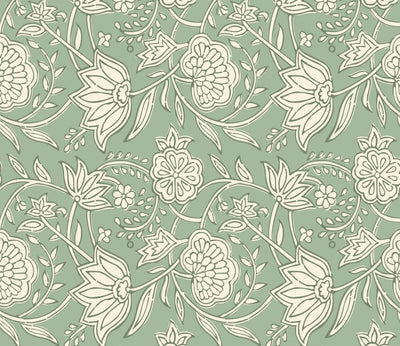
A peel-and-stick sheet is a different animal. Main Street's Block Print Floral sheets, for example, are 11 x 16 inch peel and stick paper wallpaper with a self-adhesive back, sold in 12-packs. You do not fold a sheet like that into an origami box, because the adhesive side will grab itself. Where it shines is covering a flat surface in one smooth piece: a clipboard, a box lid, the back wall of a dollhouse room.
A simple test before you start any project:
- Will the paper bend, fold or roll? Reach for scrapbook paper.
- Will the paper lie flat over something rigid? A peel-and-stick sheet is usually faster and flatter than glue.
- Both? Build the folded parts from scrapbook paper and cover the flat panels with an adhesive sheet.
Crafts to do with scrapbook paper: seven projects worth the paper
You need a craft knife, a metal ruler, a cutting mat and a bone folder (the back of a butter knife works in a pinch). If you want the cutting and scoring techniques in more depth, our guide to paper crafts for adults walks through each one.
1. Wallpaper a dollhouse or a shadow-box room
This is the project scrapbook paper was born for. A small-scale print reads as full-size wallpaper once it is inside a room the size of a shoebox. Measure each wall, cut a paper template from plain printer paper first, and trace it onto the pattern so the windows and doorways land where they should. A fine, delicate print works best; a big bold floral at that scale looks like one giant flower. For back walls you can reach easily, a peel-and-stick sheet goes on without glue and stays flat.
2. Folded masu boxes for small things
A masu box folds from a single square with no cutting and no glue. Start from a full 12 x 12 inch sheet and you get a box roughly 4 inches across and 2 inches deep, sized for jewelry, paper clips or seed packets. For the lid, fold a second square trimmed about a quarter inch larger. Patterned paper earns its keep here because the print shows on the outside of the box and the base, so pick a double-sided sheet if you have one.
3. Accordion rosettes
Cut three strips about 2 inches wide across a 12-inch sheet, fan-fold each one in half-inch pleats, then join the strips end to end into a ring. Press the ring flat into a disc and hold it with a paper circle glued to the back. A small circle of contrasting paper covers the center. They look best in groups, so make a second one from 1.5-inch strips and a third from 3-inch strips.
4. Pinwheels on a dowel
Cut a 6-inch square, slice from each corner toward the center (stop about an inch short), then bring every other point into the middle and pin it through a bead into a wooden dowel. Two-sided paper matters most for this one, since both faces show when the pinwheel spins.
5. Rolled paper beads
Cut long, skinny triangles (about an inch wide at the base, tapering to a point over 11 inches), roll each one tightly around a skewer starting from the wide end, and glue down the tip. The taper gives you a fat, oval bead with the print spiraling around it. String them into a garland or a bookmark tassel, and seal them with a clear decoupage medium if you want a glossier finish.
6. A paper quilt wall hanging
Borrow the geometry of a patchwork quilt. Cut a stack of 3-inch squares, slice some on the diagonal into triangles, and lay out a nine-patch or pinwheel block on a sturdy board. Mix two or three prints with a solid so the pattern has somewhere to rest. Glue each piece down with a glue stick, working from the center out, and hang the board on a ribbon.
7. Labeled pantry or craft-room boxes
Combine the masu boxes from project two with labels you can rewrite. A strip of Chalkboard Classic craft paper (an 11 x 15 inch sheet you write on with chalk or chalk markers) cut into small tags gives each box a name you can change when the contents change.
Where a peel-and-stick sheet does the job better
Glue and thin paper do not always get along. Liquid glue soaks into lightweight patterned paper and makes it ripple as it dries, and a big panel is hard to smooth before the glue grabs. That is where an adhesive-backed sheet earns its place in the craft drawer.
- Clipboards and binder covers. A standard letter-size clipboard is about 9 x 12.5 inches, so one 11 x 16 inch sheet covers the face with a little to spare for trimming. A crisp geometric like Indigo Diamonds makes a plain board look store-bought.
- Box lids and tray bottoms. Large flat panels go on in one piece, with no glue lines showing through the print.
- Dollhouse floors and back walls. Easy to reach and perfectly flat. Line up one edge first, then smooth the sheet across from that edge so the pattern runs straight.
Lining drawers with scrapbook paper is a popular idea too, and it has its own quirks (loose paper slides, glued paper is hard to get out). We covered it in detail in wrapping paper as drawer liner, which applies just as well to a stack of 12 x 12 sheets.
Decorative craft paper: matching the print to the size of the project
The single biggest reason a patterned paper project looks off is scale. A print that looks lovely on a full sheet can turn into an unreadable smudge on a 1-inch bead, or a lonely half-motif on a 3-inch quilt square.
- Tiny projects (beads, dollhouse walls, rosette centers): choose small, dense prints and tight stripes. A fine stripe such as Woven Stripe keeps its character even when cut down small.
- Medium projects (masu boxes, pinwheels, quilt squares): mid-scale florals and geometrics, where at least one full motif fits on each face.
- Flat panels (clipboards, lids, a back wall): this is where the big, painterly prints get to show off, because nothing cuts the motif in half.
Before you cut, hold a paper window the size of the finished piece over the sheet and slide it around. You will see right away whether the pattern survives the trip.
Glue, tape and cutting: keeping thin paper flat
Patterned paper is easy to cut and fussy to stick. A few habits help:
- Use a dry adhesive for flat work. A glue stick or double-sided tape keeps lightweight paper from rippling. Save liquid glue for small joins, like the end of a bead or a rosette seam.
- Score every fold. Run a bone folder along a ruler before you fold, especially on boxes. The crease lands where you want it and the print does not crack.
- Change the blade often. A dull blade drags and tears printed paper at corners. Snap off a fresh segment for each project.
- Store the leftovers flat. Curled paper fights you on every project after this one. Our guide to craft paper storage covers boxes and drawers that keep both scrapbook pads and 11 x 16 sheets flat.
If you have adhesive sheets left over after a wall or furniture project, they slot straight into this list too. Our craft wallpaper guide has more small projects built around them.
Frequently asked questions
What can I make with scrapbook paper?
Scrapbook paper suits anything that folds, rolls or layers: origami masu boxes, accordion rosettes, pinwheels, rolled paper beads, paper quilt wall hangings and dollhouse wallpaper. Choose a print scale that fits the finished size of the piece, use a glue stick or tape for flat work, and score every fold so the creases stay crisp and the print does not crack.
Can you use scrapbook paper as wallpaper?
On a dollhouse, shadow box or miniature room, yes, and it is one of the best uses for small-scale prints. On a real wall it is impractical: 12 x 12 sheets have no adhesive and leave a grid of seams. For a full wall or a piece of furniture, peel-and-stick wallpaper sheets are made for the job and go up without paste.
What is the best glue for scrapbook paper crafts?
For flat surfaces, a glue stick or double-sided tape is the safest choice because neither soaks into thin paper and makes it ripple. Liquid craft glue works for small joins such as bead tips or rosette seams. For large flat panels, an adhesive-backed sheet avoids glue altogether and goes on in one smooth piece.
Is scrapbook paper the same as cardstock?
Not quite. Cardstock is a heavier, stiffer paper, often in solid colors, used for card bases and anything that needs to stand up. Patterned scrapbook paper is usually lighter and printed with designs on one or both sides. Many projects use both: cardstock for the structure and patterned paper for the decorative layer on top.
What is the difference between scrapbook paper and peel-and-stick paper?
Scrapbook paper has no adhesive, so it can be folded, rolled and glued wherever you choose. Peel-and-stick paper has a self-adhesive backing that sticks the moment it touches a surface, which makes it better for covering flat, rigid things like clipboards, box lids or furniture panels, and less suited to folding projects where the sticky side would catch.
Featured in this article
Shop the wallpapers mentioned above.


Crafts to Do With Scrapbook Paper: Seven Projects That Use It Up

Christmas Paper DIY Decorations for Walls, Fireplaces and Bedrooms

Dollar Tree DIY Christmas Decorations: 8 Paper Makeovers for Decor and Gifts

Christmas Crafts for Adults: Paper Projects for One Evening

How to Clean Shelf Liner and Contact Paper, Type by Type


